How often do you step back from your painting when you’re working on it?
I mean REALLY step back. Three feet. Six feet. Even further if you have the space.
I’ve been thinking about how important this simple act is.
When we’re working on a painting, we’re usually pretty close to it. We’re concentrating on a mark, an edge, a colour, a shape. We’re caught up in all those little decisions.
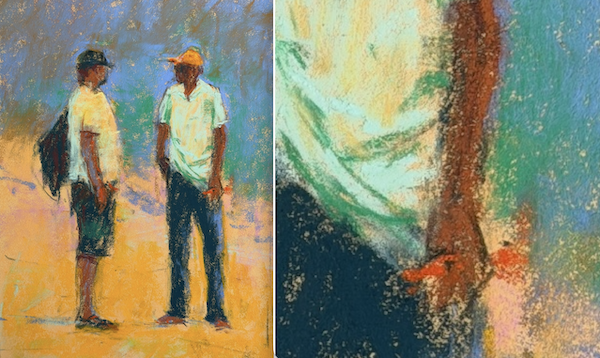
But here’s the thing. Up close, we see the marks. From a distance, we see the painting.
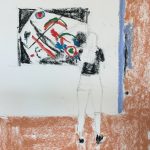
Think about how we look at paintings in a gallery. Most people stand back to take in the whole painting. (Unless you’re an artist, in which case you probably have your nose practically touching the surface, trying to figure out how on earth the artist made that magic happen. And then a gallery attendant tells you to step back before the alarms go off. Ask me how I know!)
I step back a lot when I paint. I’ve noticed, however, that I tend to do it more frequently as I approach the end of a painting.

In the beginning, I’m working more intuitively, making bold marks, letting things happen. It’s often chaotic and messy! But as the painting progresses, my analytical brain comes more into play. I’m assessing and refining, making smaller, more considered decisions, looking at how everything is working together.
And that’s when stepping back becomes super important.
And, by the way, this is one reason I’m such a fan of working at an easel. It makes stepping back to see your painting sooooo much easier!
I think there’s something important about making a mark and then stepping back BEFORE deciding whether it works. That mark that looks too bold, too bright, or just plain wrong when you’re twelve inches away might be exactly what’s needed when you see the painting as a whole.
How many times have we fiddled with a perfectly good mark simply because we judged it from too close?
And that’s another reason to step back from your painting. It interrupts the urge to fiddle. It creates a tiny pause, a space, between doing and judging.
You make a mark. You move away. You take time to look. Only then do you decide whether the mark needs changing. Or even whether another mark is needed at all.
Such a small action. Yet it might save us from fussing with a mark that was perfectly good in the first place!
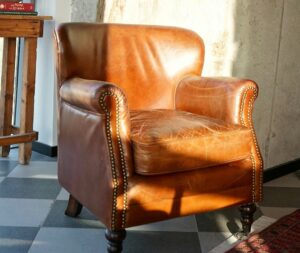
And when you need more than a quick step backwards, there’s always the Pondering Chair, a place to pause and really consider where your painting is going.
So here’s my little reminder:
Make a mark. Step back. Look. THEN decide.
And don’t wait until you’re nearly finished!
Do you remember to step back regularly when you’re painting? Or do you sometimes find yourself fiddle faddling with a mark before you’ve really seen what it’s doing? I’d love to hear!
Until next time!
~Gail
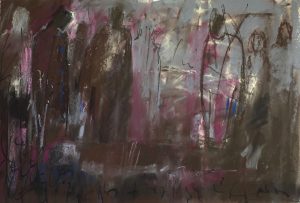
PS: Curious about the painting I’ve used to illustrate this musing (the painting and an extreme close-up of it – just as it would look if I was working on it!)? You can read more about how it came about here.