
Is artistic talent inherited? That’s a question I’ve been pondering lately.
Whenever someone learns that my mum is an artist and then that her father was an artist too, and also my Dad was an architect, I often get a knowing smile.
“Well, there you go. That’s where your talent came from. You inherited it.”
And perhaps I did.
Maybe I inherited a sensitivity to colour. Maybe I inherited an eye for shape and pattern. Maybe I inherited a love of drawing. But the older I get, the more I wonder what we really mean when we talk about artistic talent. Is it something we’re born with? Is it something that develops over time, as we put in the hours of work? Or is the answer somewhere in between?
The more artists I meet, the less certain I become.
At Some Point, Someone Had to Be First
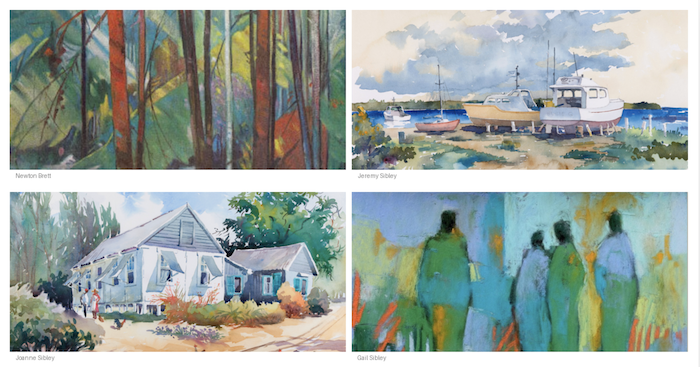
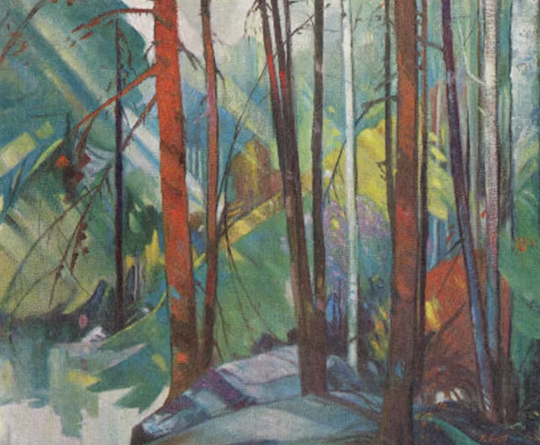
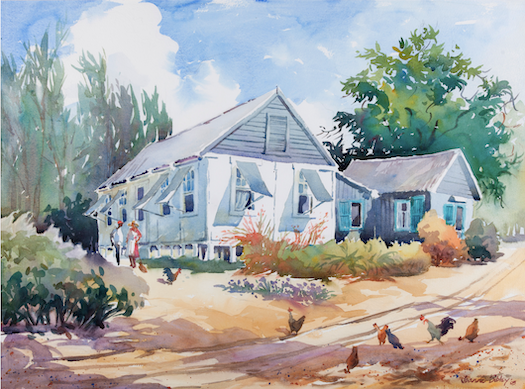
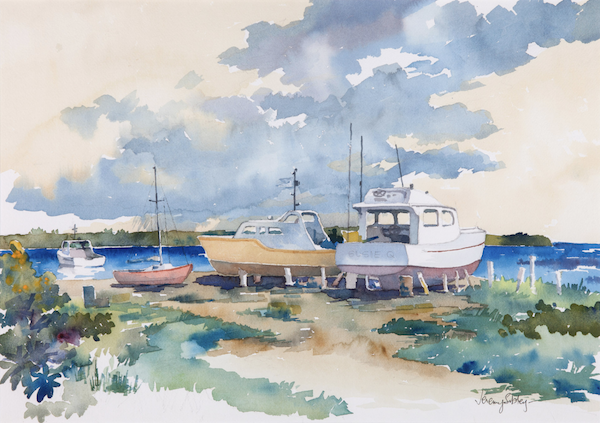
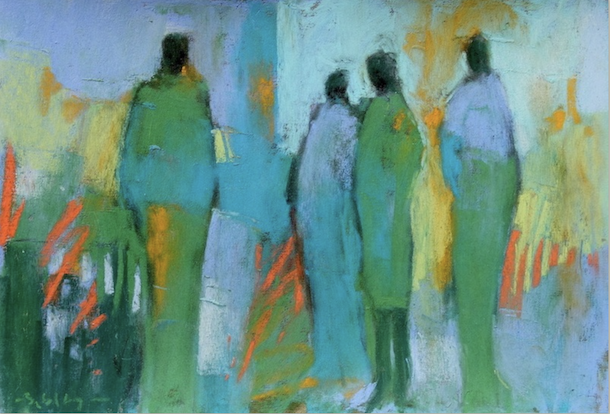
My grandfather, Newton Brett, was an artist at heart. He worked during the day (as a commercial artist) and painted in the evenings and on weekends. My mum, Joanne Sibley, is an artist. My father, Jeremy Sibley, would often sketch and paint.

Looking at that family tree, it’s easy to conclude that artistic talent simply runs in the bloodline. In fact, that’s often the assumption people make.
And maybe there’s something to it.
But the thing is, as far as I know, neither side of my family has a history of artists stretching back beyond my grandparents. And on my Dad’s side, nothing before him!
At some point, someone had to be first.
I keep returning to that thought because it complicates the story.
My grandfather didn’t emerge from a dynasty of painters. He was born to a farming family in Manitoba. Somehow, somewhere along the way, he developed an interest in art. He found time to paint around work and family commitments because painting mattered deeply to him.
When I picture him sitting in the dining room with his paints, I’m struck less by the possibility of inherited talent and more by the evidence of his keen dedication. That’s what really resonates for me.
Whatever natural ability he may have possessed, it wouldn’t have amounted to much if he hadn’t actually done the work. Raw talent may have opened the door, but he still had to walk through it.
What Are We Really Seeing?
When someone says, “You’re so talented,” what exactly are they responding to? Seriously.
Are they seeing an innate gift? Or are they seeing the visible result of years spent learning, experimenting, practising, failing, and trying again?
I suspect it’s more of the latter.
The word talent can make art seem effortless. It can make it sound as though a painting emerged because the artist was somehow blessed with a special gift.
As though it arrived fully formed.
As though there weren’t years of learning behind it.
But that’s rarely the whole story.
Every artist has a private collection of paintings that didn’t quite succeed. Colour combinations that looked wonderful in theory but fell flat on the paper. Compositions that didn’t quite work. Experiments that taught valuable lessons but certainly never made it into a frame.
Those experiences at the easel rarely get included in the story. Yet they’re often the very things that help an artist grow.
When we focus only on artistic talent, we can miss the years of persistence that sit invisible behind the work.
What Have I Actually Inherited?
As I’ve said, people often assume that because I come from a family of artists, I inherited artistic talent.
Maybe I did.
But over the years I’ve started wondering if that’s really what was passed down.
Because I’ve met people from wonderfully creative families who have no interest whatsoever in making art. They appreciate it, perhaps, but they feel no pull to paint, draw, sculpt, sew, write, or make things.
And I’ve met artists who seem to have appeared from nowhere. People whose parents weren’t artists. Whose grandparents weren’t artists. People who simply discovered a spark and chose to follow it.
My grandfather did.
My father did too.
Neither came from a long line of artists, yet both devoted themselves to creative pursuits. That fascinates me. Because it suggests that talent alone isn’t enough. After all, what good is artistic talent if you have no desire to use it?
And what happens when someone with no obvious artistic lineage discovers a passion for making art and decides to pursue it?
Perhaps the more interesting question isn’t whether artistic talent is inherited. Perhaps it’s what we do with whatever we inherit. Maybe what I inherited was more than any talent. Maybe it was permission.
Permission to take creativity seriously.
Permission to spend time painting
Permission to believe that art matters.
Growing up, I saw people (my parents, their friends like Susan Alexander) making art. I saw paintings in progress. I saw creativity treated as something worthwhile rather than frivolous. I saw adults who made room for art in their lives, even when they were busy with work and family responsibilities.
That was such a gift.
Maybe It’s a Bit of Both
So, is artistic talent inherited?
Honestly, I don’t know.
Perhaps some aspects are. Perhaps there are natural inclinations that make certain pursuits feel more intuitive. Perhaps some people begin a little further along the art path than others. I won’t dismiss that possibility.
But I’ve never met an artist who became accomplished on talent alone. I’ve met many who became accomplished as an artist because they kept going.
Because they stayed curious and continued learning.
Because they made bad work and then made more work. And even more work.
Because they fell in love with the process.
When I think about my grandfather painting in the dining room after a day’s work, that’s what I remember most. Not the possibility that he inherited artistic talent from someone before him. The fact that he was passionate enough about painting to do it in the evening after working all day.
And perhaps that’s the part of the story we should talk about more often. The hours spent at the easel with no guarantee of success, simply a belief that something worthwhile might emerge.
What Do You Think?
Do you think artistic talent is inherited?
Have you ever seen creativity run through a family?
Or have you seen someone become an artist despite having no obvious artistic background at all?
What do you think is passed from one generation to the next: talent, encouragement, opportunity, permission, persistence, or something else entirely?
And, have you ever assumed someone else’s success came from talent while yours would/could only come from hard work?
I’d really love to hear your thoughts in the comments. The more artists I meet, the more curious I become about where talent ends and dedication begins.
Until next time,
~ Gail
P.S. My two siblings also have creative leanings: my brother loves photography and creates beautiful card designs for his company Freebird Letterpress, while my sister leans towards sculpting, sewing, and designing for her company Talawa Tees (on hold at the moment due to tariffs). Perhaps that supports the inherited-talent theory. Or perhaps it simply means we all grew up in a family where creativity was valued and encouraged. I’m still not sure!
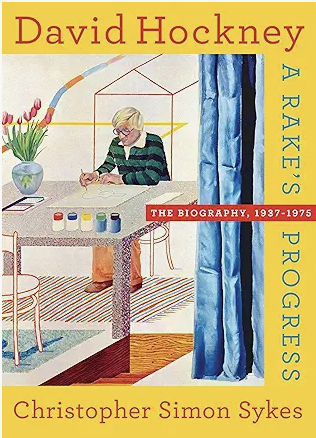
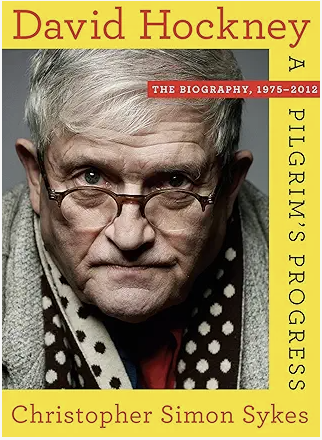
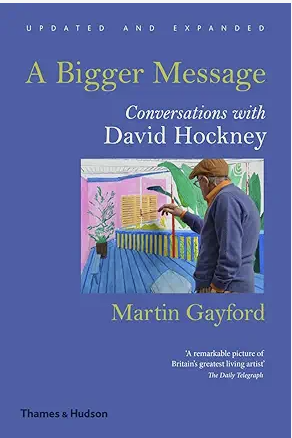
PPS. As I was preparing to publish this post, I heard the news that artist David Hockney died on Thursday (11 June). A favourite artist of mine, he was such a role model of courage and doing art his way. And…his parents were not really artistically inclined but they certainly encouraged him to follow his path and “not worry what the neighbour’s think!” An idea Hockney lived by and one we should all take to heart.
Three wonderful books – two parts of Hockney’s biography and one in conversation with him. (And yes, I receive a small commission from Amazon if you click on the books covers and purchase through these links.)
UPDATE July26: Shortly after finishing this post, fellow artist Ugo Paradiso sent me his thoughtful article, The Iceberg of Art: Why Skill Beats Talent. It approaches the conversation from a different angle, focusing on the distinction between innate talent and learned skill. I love his use of the iceberg analogy, where talent is only the small visible tip while skill forms everything beneath the surface. I think it makes a wonderful companion piece if you’d like to continue pondering the topic.











![Gail Sibley, [Not yet titled], Unison Colour pastels and a Sennelier pink on UART 400 mounted on board, 15 1/4 x 11 1/2 in -close up of face](https://www.howtopastel.com/wp-content/uploads/2025/07/11.-Gail-Sibley-Not-yet-titled-Unison-Colour-pastels-and-a-SEnnelier-pink-on-UART-400-mounted-on-board-15-14-x-11-15-in-close-up-of-face-Feature-image-150x150.jpg)





32 thoughts on “Is Artistic Talent Inherited?”
Gail, I’m so glad you pursued this topic. Permission to take creativity seriously really resonated. It has always beens strange to me that creative expression falls to the bottom of life’s priorities and yet life is so much more palatable when we engage in creative endeavors and pause to focus on the beauty of what could be mundane.
I’m delighted to hear what resonated with you Carol. And you are so right, about the peculiar truth of how art-making falls to the bottom of the priority pile and yet gives us such joy.
Hi Gail, thank you for this thought provoking article. I wonder if it’s a good mix, and perhaps a different mix for each person of the ideas you suggest. I too thought of David Hockney as I read your words. The BBC posted an interview with him yesterday which was wonderful to watch…. and it really highlighted his work ethic. It left me inspired to spend more time sketching and in the studio. I do feel that pencil/ paint miles (or whatever medium one uses) is key to success ( in reaching artistic aims) and something I fall well short of! So your words sit next to David Hockney’s interview to encourage me to put in the hours😂. Thank you!✨🌻
Ahh Carol, thank you so much. And yes, I am sure it’s a different mix for everyone.
Hockney really did have a strong work ethic. I think that’s the thing about art-making – if you’re serious about it, then you need to settle in and do the work! LOVE that you were inspired by that interview with him. Do you have a link to that interview? It would be cool to have it here.
Hi Gail, Here’s the David Hockney interview I mentioned
Awesome, thanks Carol! And ohhh there’s so much more!!
I believe the key words are innate sensitivity combined with motivation, and probably less inherited talent. As you mentioned, talent alone is hardly enough (the old sentence of “10% inspiration and 90% transpiration”…).
If one has a sensitive personality and is lucky enough to be exposed to artistic creation through family members, friends, museums, etc., will likely be driven to it at some point in life.
I love that Jose! Thank you for contributing your ideas. And yes – that old saying 10% inspiration and 90% transpiration or perspiration – still true.
I have a musical background, and it definitely came from both sides of the family.
On my mother’s side, it goes back at least four generations to my great great grandfather, who was a professor of music at Queen’s College — now Queen’s University Belfast — in Belfast, Northern Ireland.
On my father’s side, his mother was an esteemed organist and pianist. Both my parents were musical.
As a baby, I would sing the melodies my mother was singing — classical music, but without the words — from my crib.
None of my other three siblings has much musical ability or appreciation, although they all tried.
I think music is a language, and visual art is a language too — and sometimes, that language is passed quietly through the generations.
Ohhh Susan, that’s so cool. Thank you for sharing something of your musical background! Interesting about your siblings.
Would you say that background has also influenced your art-making??
Hi Gail,
Yes, I think it has influenced my art-making. Sometimes I feel like it’s a performance, the work I create. It has that same feeling and flow. Other times, not so!
Oh that’s a cool thought Susan – art as performance (and no pressure right 😬)
Gail, sometimes the best performances happen when you are a bit pressured!
You have that right!!
This post struck a nerve!
My mother says to me all the time, I wonder where you got your talent. This question irks me! She’s referring to the fact that no one in the family makes or has made art besides one of her distant cousins and of course, me. I tell her “talent” is my hard and persistent work, not some gift passed along. My own belief around “talent” is that it is an interest or an urge that one decides to take seriously and then work at. Probably most people who are considered talented are more easily disposed to certain aspects of the “thing” they are deemed to be talented at. But there will always be parts of that “thing” they struggle with and have to work at in order to take it somewhere. One trick ponies don’t get very far.
I’ve had people remark after seeing paintings of mine (the ones I allow people to see) “you’re so talented”. What if they if they only saw some of my (many, many) failures? They’d probably decide, she’s not very talented. So am I or aren’t I? It seems to depend on the work people are judging and whether these judges believe it has value. I do think being called talented is meant as a compliment but I also believe that it is a short sighted term that often doesn’t account for all of the labor (the endless study, planning, experimenting et cetera, et cetera) that goes into finished work.
Yes yes YES! Thank you for going deeper into this idea Bonnie and for sharing your personal experience with it. Nothing can replace the hard and persistent work we put in. People often do say “you’re so talented” as a compliment and yet, look under the surface and find what’s really being said!
YES!! This resonates with me totally. There are no artists anywhere in my family line, and growing up we were not bathed in art appreciation, museums, concerts etc. I grew up in a war-torn country where other things mattered more. I did grow up trying to make things out of nothing much / whatever was available & using my imagination on how to turn scraps into useful.
Maybe this started a journey on “how to see”?
I have tried my hand at many “hobbies” over the years and only lately have started my art journey, which I love -exploring and spending countless hours shading & blending & trying things, always thrilled when something blossoms out of the paper. I get a bit miffed (not the right word, as I am appreciative of the complement, but it seems to toss off the hours of time spent learning and doing) when people say I have talent. I love to create, I am tactile and art seems to fulfill a need in me. I am learning to be a better observer of light, shadow, shape.
I think children from artistic families (whether it is art, music, dance, culinary…) are encouraged to take the time to see, feel, touch, hear the world in a different, deeper way and maybe that in itself is a talent. The ability to bring joy & delight using our senses for more than “fight or flight”.
Oooooo lovely Debra. Thank you for sharing your experience as a child growing up without artistic stimulus or family artists. Even without that, you were drawn to create, beyond the natural tendencies of children to move in that direction.
And I hear you about receiving the “you’re talented!” compliment. I think miffed is the perfect word lol! People are saying that from a place of admiration and yet don’t understand the flip-side-of-the-coin message or at least, don’t understand the alternate impact on us!
Keep moving on your journey of self-understanding and learning as an artist. It’s a marvellous path to be on!!
Gail, I am of the belief that anyone who has the desire to create can be taught. Anyone who has the desire can learn to see the world from an artistic perspective. That said, I believe if beautiful colors, details and shapes are pointed out to children from a young age, they will develop an ability to see beauty everywhere and thus may nurture a desire to create. In that sense, one may say talent can be inherited.
I love your blogs! Keep them coming!
Marcia
Love hearing all of this Marcia!
I agree. I think once our keen observations are pointed out to others either in life or through our paintings, others begin to “see” more deeply.
I think children are often curious and open and seeing. It seems that it’s the way they are “contained” as they develop especially in school that can close off those ways of seeing. Just ideas.
One of life’s mysteries.
I think an artist who has inherited fine motor skills or hand Eye co-ordination or spacial awareness etc will find those inherited traits very useful to have,making learning to draw so much easier and natural.
It is a good question. Is our talent merely keen interest that was encouraged or do we have a special something a God given gift that shines through the work we create, that still requires discipline to develop.
Ohhhh I like how you are naming actual skills we use as artists Melanie!
And yes, that is definitely the question!
This really resonated with me. My grandmother had some piano training as a youngster, had a beautiful voice. She only played at home and sang in church…but I loved hearing her. I would sometimes try to bang out some tunes by ear on her piano. My dad took accordion lessons when I was a toddler…played the same songs out of the same books…made the same mistakes and facial grimaces in the same tough spots every time he played. He passed when I was young…I’d give anything to hear him make those same mistakes again. My mother, who had no training did end up singing on a local radio program when she was a teenager, but never went beyond that. She did, however take a ceramics class that she absolutely loved. So, on her own, she learned more about it…won several awards and ended up teaching ceramics. Her drawing and painting skills…not so much. I loved music and started to teach myself guitar when I was about 9 yrs. old. We didn’t have the money for lessons…and if I’d had lessons, I don’t think the challenge would’ve been there. I was terrible for a long time…but I LOVED it. I WANTED to do it…so I struggled. I ended up playing guitar for a living for over 30 years.
I also loved to draw as a kid…my parents would supply me with paper and pencils…where I would continue for years drawing stick figure soldiers in stick figure battles. Eventually, I started copying pictures out of magazines…cool cars, street scenes and whatever caught my eye. Started doing some watercolors in middle school and high school…nothing exciting, but I loved doing it. In the early ’90s I had to get out of the bar scene and started drawing again. I got books that helped me…perspective, composition…and then I discovered pastels. Woah! Eye opener….again, LOVED it.
I’ve never thought of myself as talented, but if something captured me like guitar and pastels, I HAD to do it. So I learned how…and I’m still learning how…
Ohhhh Curtis – thank so much for sharing so much about your family inclinations towards creativity and art. LOVED hearing it all. And it’s interesting how much that word “love” comes up in what you wrote. I think that’s the thing – it’s the passion, that love of doing a certain thing that drives us regardless of how well things turn out. I also think something else crucial to our art practice is having those who love you, encourage you rather than dissuade you from the thing that makes you feel alive. I think our art is responding to our soul’s calling and sometimes that call can be crushed by others – family, society, culture. Other times, well it’s encouraged and flies free to sing its song!!
Hi Gail, just to say that the link I posted has the interview quite far down in the article. It’s not the 59 second one near the top.
Got it!!
Gail, thanks for your thought-provoking commentary. I think that I’ve always been sensitive to the arts; I drew Disney characters as a child, sketched stick figures cartoons for office colleagues as an adult, wrote for theater (and was fortunate to have several productions off-Broadway in NYC), and tried my hand at poetry. It wasn’t until I retired that I gave myself permission to try and actually paint in a class with other adults. It took even longer for me to understand that I could take my art seriously and share it with others. So for me it was all about “permission.” And thankfully, at 80, I can say that I love painting.
Whoo hoo Brooke!! I’m glad you got to the point where you can feel and express that final sentence! And thank you so much for sharing your fabulous creative journey. So much goodness! And yes….permission!
I think ‘natural inclination’ is a good term. So it is with art as it can be with numbers, with spatial organization and so on. Some follow that natural inclination because it may feel easier to do than something else, but unless there is passion and perseverance, that natural inclination will get left on the cutting room floor.
You got it Johanne! Love that metaphor of the possibility of that natural inclination ending up on the cutting room floor if there’s no drive to follow through with it!
I do think some people are born with abilities that others do not have, whether it’s being able to jump higher, make sense of a piano earlier in life, draw something recognisable before others can or learn to read early and quickly, but what happens to that ability is often dependent on how it is received within the family.
Drawing well may go unnoticed in one family while running faster than others may elicit dreams of Olympic medals in others. Whatever “gift” the child possesses can be encouraged or dismissed throughout their early years depending on their immediate family and/or schooling.
Perseverance by the one with the ability is what makes the difference: to keep drawing and painting because they just love doing it is just as big a driving force as what makes a child get up at ungodly hours to swim laps in a pool. Most parents worry far more about the artistic child’s future than they do about the athlete or even the musician because they’re concerned about how they will make enough money to live a decent life.
Somehow, art can be “set aside” while they learn work skills, while the athlete, at least in the USA, can get into a better collage or the musician can still play with groups or sing and possibly be a millionaire by the time they’re 18!
I love this perspective Suzanne! You’ve highlighted something I only hinted at in the post: that it’s not just any natural ability we may have, but how those around us respond to it that can shape what happens next. Encouragement (or the lack of it) can have such a profound impact.
And I completely agree about perseverance. Whatever the pursuit, those who keep showing up because they love it are often the ones who grow the most. Thank you for such thoughtful ideas!