Step Back From Your Painting! Why Distance Matters
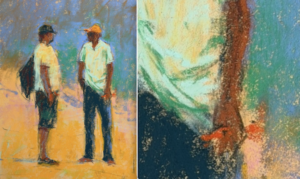
Sometimes the best thing you can do for your painting is move away from it! A little distance can change what you see and what you decide to do next.

Sometimes the best thing you can do for your painting is move away from it! A little distance can change what you see and what you decide to do next.

Why do our lively, experimental colour studies sometimes turn into cautious, conventional paintings? A Studio Musing about artistic freedom, the pressure to make a ‘proper’ painting, and recognising when we’ve already created something worth keeping.
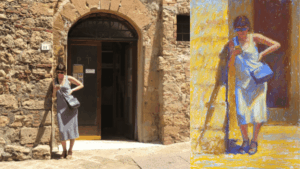
When did your reference photo stop being a reference and start telling you what to do? Let’s look at why photos have such authority over us, and how to put the decision-making back where it belongs: with the artist.
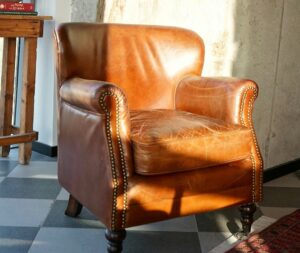
A Pondering Chair may not seem like an essential piece of studio equipment, but it can change the way you look at your work. A place to sit, step back, and simply ponder can help you see more clearly, slow down, and resist the urge to keep fixing.
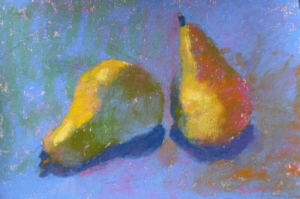
“I don’t know what to paint.” It’s one of the most common frustrations artists face. Sometimes the answer isn’t finding a more exciting subject – it’s discovering how much one simple object can teach you. Here’s why I keep coming back to pears.
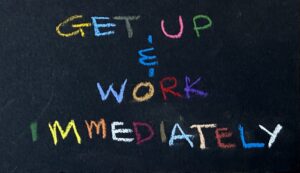
When I heard about David Hockney’s bedside note, I smiled. Then I couldn’t stop thinking about it. Why would one of the world’s most prolific artists need a reminder to get up and work? The more I sat with that question, the more I realised the note wasn’t about motivation at all. It was about something much deeper.
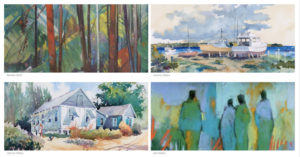
People often assume my artistic talent was inherited. After all, my grandfather, mother, and father were all artists. But the more I think about it, the more complicated the story becomes. Is artistic talent inherited? Or do we inherit something less obvious – permission, encouragement, curiosity, and a belief that creativity matters? In this post, I explore the question and invite you to weigh in.
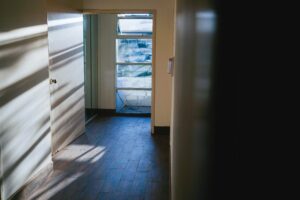
Do you need an art studio in order to paint regularly? Perhaps the better question is: what makes a space support your return to the work?
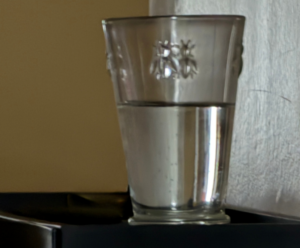
A disappearing glass edge, reflections in cutlery, glowing leaves, and shadows on a church wall—small moments that reveal how artists learn to see.

An email arrives. Someone loves your work. Your heart leaps. But not all enquiries are created equal. In this Studio Musing, I unpack a scam message and explore how to tell the difference between flattery and genuine interest.