“I don’t know what to paint.”
That’s one of the most common frustrations I hear from beginning artists.
It’s a fair question. It’s not that we don’t have options; it’s that we can be overwhelmed by them.
We’ve all stared at the hundreds (or thousands!) of photos on our phones, hoping inspiration will suddenly strike. Or looked around the studio, surrounded by possibilities, yet nothing quite grabs us.
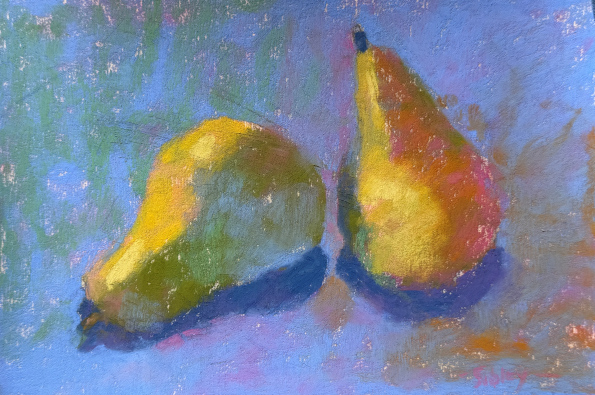
Recently, while searching through my blog archives (back to 2014) as I prepared for something else entirely, I noticed a pattern. I kept returning to pears.
Again. And again. And again.
Not because I was obsessed with pears (well…not a lot!). Not because pears are somehow the perfect subject (well…maybe they are!).

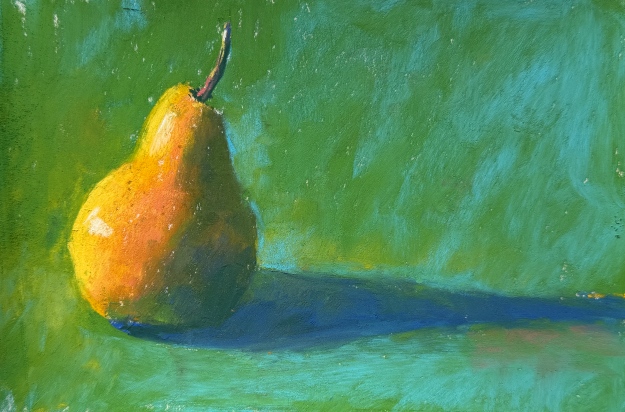
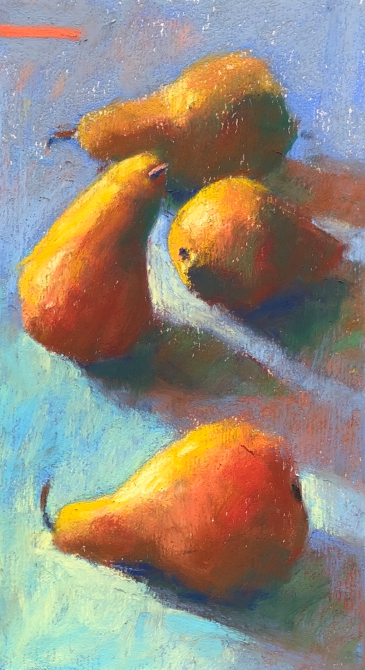
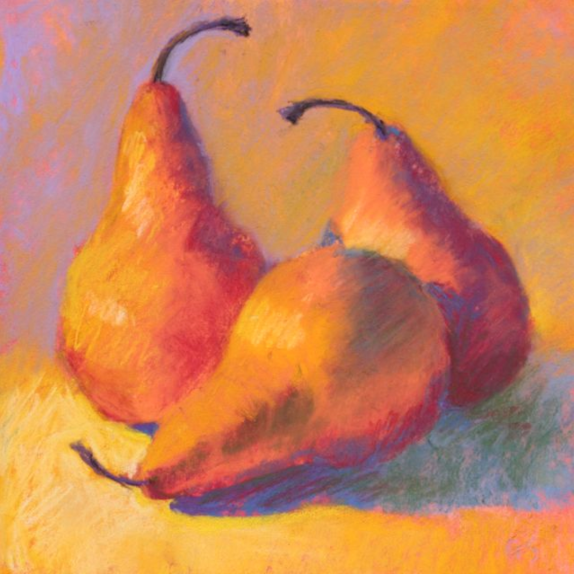
But because every time I painted one, it had something new to teach me. (Click on the photo captions to check out the blog post where five of these paintings reside.)
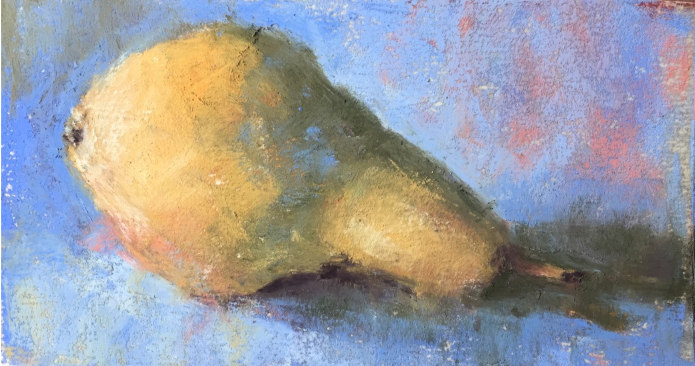
3 x 5 1/2 in
Why Pears?
Pears are wonderfully ordinary. They’re generally easy to find, and no two seem to have quite the same shape or character.
They don’t carry the emotional weight of a portrait or demand the complexity of a landscape. Instead, they sit patiently while you study them.
Yet within that simple shape is almost everything an artist needs to practise:
- light
- shadow
- edges
- colour temperature
- reflected light
- form
- subtle value shifts
- negative space
In other words, the pear isn’t the lesson.
The pear simply allows you to focus on the lesson.
The Pear Stayed the Same. I Changed Things Up.
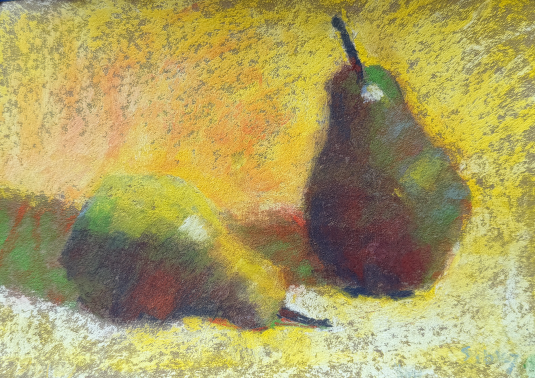
Looking through the many paintings I’ve done with pears, I realised something else. Although the subject hardly changed, the paintings certainly did.
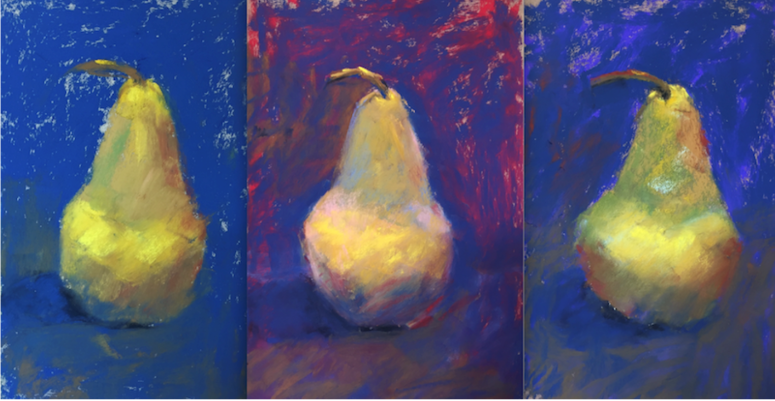
Sometimes I was exploring colourful underpaintings. Sometimes I was experimenting with different pastel brands. Sometimes I became fascinated by composition. Other times I wanted to see how changing the background changed everything else.
Some paintings featured one pear.
Some had two. Some had three. Some had four.
Sometimes I loosened up.
Sometimes I slowed down.
The pear quietly came along for the ride while I learned something new each time.
Changing the background changed the colours around the pear. Altering the lighting changed the mood. Cropping differently changed the composition. With each change, the feeling of the painting changed.
The possibilities seem endless, even though the subject hardly changes.
We Often Look Too Far Afield
I wonder if one of the biggest mistakes we make as artists is believing we need a new subject every time we paint.
A dramatic landscape.
An unusual flower.
A spectacular sunset.
An exotic location.
Those things are wonderful. But they aren’t what make us grow.
Growth often comes from staying with one subject long enough to really begin seeing it.
The first painting teaches you to draw the subject. The second teaches you to see the values. The third reveals colour you missed before. By the fifth or sixth painting, you begin noticing things that were invisible when you first started.
That’s when the magic begins.
Perhaps What We Really Need Is a New Thought
Instead of saying,
“I don’t know what to paint.”
try asking,
“What can one simple object teach me?”
Then start experimenting.
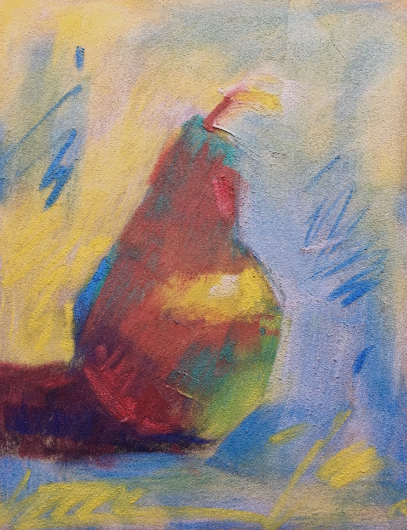
- Change the light.
- Turn it around.
- Paint it larger.
- Paint only the shadow.
- Use a limited palette.
- Crop it unexpectedly.
- Paint it in ten minutes.
- Paint it again tomorrow.
Suddenly, one ordinary pear becomes a dozen different painting lessons.
Why Pears Became the Subject for the Demo in Pastels 101
Looking back through these paintings reminded me why pears became the demo subject in my Pastels 101 course.
Not because I wanted everyone to become experts at painting pears!
It was because a simple subject removes so much of the overwhelm and lets you concentrate on what really matters: seeing and understanding light, colour, and form.
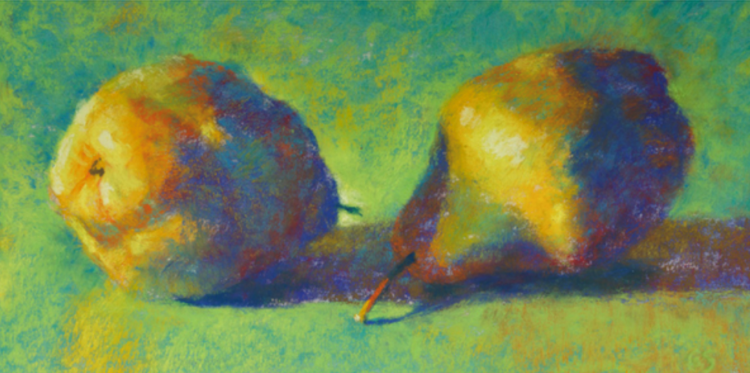
You can stop worrying about painting a pear and start noticing. A pear’s gentle curves invite you to study form. Its subtle colour shifts challenge you to see beyond “green” or “yellow.” Light wraps around it beautifully, revealing soft transitions, reflected colour, and both hard and soft edges.
A pear asks very little of you except that you really look. That you observe deeply.
And perhaps that’s the greatest gift a humble pear can give us.
As for me…
I think it’s time I painted another one.
I’d love to know
Next time you think, I don’t know what to paint, consider choosing one simple object. And if you were going to paint the same simple object ten times, what would you choose? Let me know in the comments!
Until next time,
~ Gail
From 2014:









![Gail Sibley, [Not yet titled], Unison Colour pastels and a Sennelier pink on UART 400 mounted on board, 15 1/4 x 11 1/2 in -close up of face](https://www.howtopastel.com/wp-content/uploads/2025/07/11.-Gail-Sibley-Not-yet-titled-Unison-Colour-pastels-and-a-SEnnelier-pink-on-UART-400-mounted-on-board-15-14-x-11-15-in-close-up-of-face-Feature-image-150x150.jpg)