
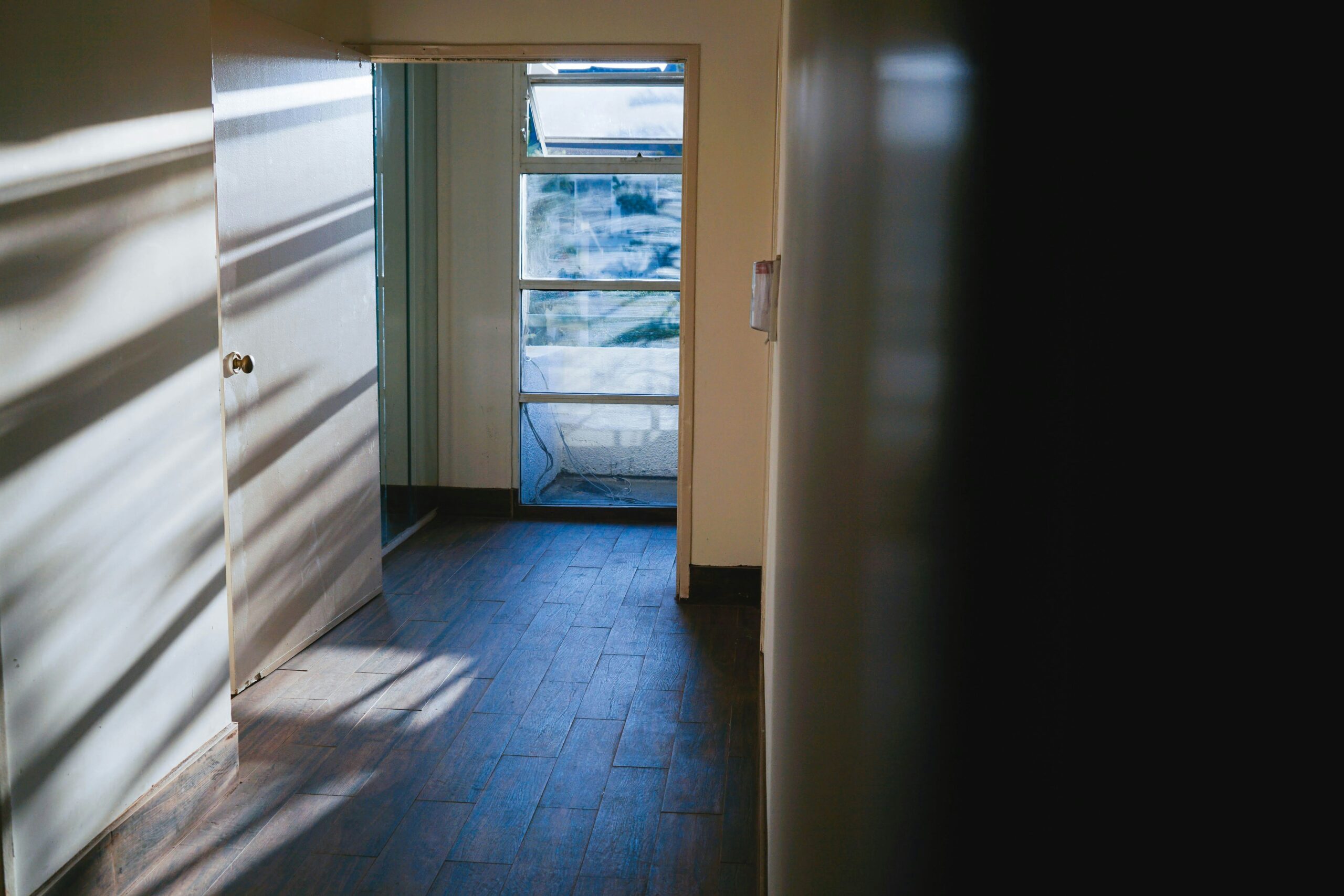
Do you need an art studio in order to paint regularly?
“When I hear a student say, ‘I don’t have a proper studio space,’ I get curious and ask, ‘What do you mean by that?’” I also suggest they consider this question: What is a studio?
Does it mean a light-filled room with north-facing windows, an easel permanently set up, shelves full of art supplies, a place you can leave everything out, and with a door you can close on the rest of the world?
Well… yes. Sometimes.
But not always.
Because for many artists, “the studio” is not a separate room. It might be the dining room table. A corner of the bedroom. A board balanced on a desk. A plein air easel and rolling cart tucked into a cupboard. A sketchbook on the kitchen counter. A place you make and unmake each day.
And yet – that still counts.
In fact, I think this matters more than we often realise. Because if we carry around a grand idea of what an art studio is supposed to be, we can quietly use that idea against ourselves.
I’d paint more if I had a proper art studio.
I’d be more consistent if I had more space.
I’d get going if I didn’t have to clear everything away afterwards.
And yes – having a dedicated space does help. Of course it does. If your easel can stay up, if your pastels are already out, if your paper is right there waiting for you, it’s easier to begin. The fewer steps between you and painting, the better.
That part is true.
But what’s also true is that many paintings have begun in imperfect spaces. Many artists have built a practice in the cracks of family life, work life, shared life. Not because the setup was ideal, but because they found a way to make space – physically and mentally – for the work.
So perhaps the question is not, “Do I have a proper art studio?” Perhaps a better question is, “What makes a space a studio?”
For me, an art studio is not defined by square footage.
A studio is any space that supports your return to the work.
That’s it.
The space may be tiny. It may be borrowed. It may have to be packed away in time for dinner. But if it helps you come back to your painting practice, if it gives your art a place to happen, then it’s a studio.
And of course, a studio doesn’t even have to be indoors. For a plein air painter, it may be wherever the easel is set down — by the sea, on a roadside, in a field. Even then, it’s still a space of attention, practice, and return.
And there’s more to a studio than the physical setup.
Because a studio is also a psychological space.
It’s a place where you’re allowed to leave things unfinished. A place where nothing has to be brilliant straight away. A place where you can make a mess, make something awkward, make something unresolved. And be okay with that.
This all matters.
Sometimes the hardest part of painting is not the actual painting. It’s getting yourself to the place where painting can begin.
And sometimes the resistance to painting is not dramatic. It’s not some huge crisis of confidence or even of identity. Sometimes it’s simply this: too many steps to get to the work.
You have to clear the space.
Gather your materials.
Cut and tape the paper.
Choose your reference.
Make decisions about the composition.
Try to find that one pastel.
And already, before you’ve made a single mark, your energy has leaked away.
This is why I so often talk about making things easier for yourself. Not because ease is the goal. But because anything that relieves friction is a good thing.
If every studio session needs to begin with 15 minutes of rearranging your life, it’s no wonder you paint less often.
This is one reason a dedicated art studio can feel so precious. Not because it’s fancy. Not because it proves something. But because it reduces friction. It says, “You can begin now.” It removes some of the obstacles between wishful thinking and action.
But even if you don’t have a separate room, the same principle applies:
How can you make painting easier to begin?
Could your materials live in one portable container, ready to go?
Could you leave one board prepared with paper?
Could you keep your most-used supplies visible rather than tucked away?
Could you create a little ritual that turns the dining room into your art studio for an hour?
These things matter more than we might think.
And then there’s another layer: Sometimes what stops us is not the lack of space. It’s what the space comes to mean.
A studio can be a sanctuary, yes. But it can also become heavy with expectation.
The painting you don’t know how to finish is waiting there.
The half-started idea that feels like a dead end is waiting there.
The comparison, the doubt, the little voice saying, “You should be further along by now,” is waiting there too.
So the studio is not only a physical place. It’s also emotional territory.
No wonder, sometimes, we avoid it.
No wonder, sometimes, the dining room table feels easier than the “real” studio. The table asks less of us. The table can feel temporary, experimental, low-stakes. A proper studio can start to feel like a place where we are meant to produce, to achieve.
But what if we reimagined that too?
What if the studio was not a place where you go to create masterpieces?
What if it was a place where you go to be present?
To look.
To try.
To notice.
To begin.
To continue.
That shifts things.
Because then the studio becomes less about performance and outcome, and more about play and permission.
And perhaps that’s what many of us need most.
Not a bigger room.
Not more storage.
Not perfect light.
Permission.
Permission to work in the space we have.
Permission to begin before conditions are ideal.
Permission to clear a space, open a sketchbook, make some marks, and call that enough.
Permission to treat our art as something worthy of space – even if that physical space is modest.
Especially if it’s modest.
So yes, I believe a studio is a sanctuary.
But I don’t think it has to be a room of one’s own in order to become that refuge.
A studio can be a spare bedroom, a garage, a garden shed, a corner of the living room, or the end of the kitchen table.
What makes it a studio is not how it looks. It’s how it welcomes you back.
And maybe that is the real question: Does your space invite you to paint?
Not impress you.
Not intimidate you.
Not remind you of what you haven’t done.
But invite you back.
Because the best studio is not the most beautiful one.
It’s the one that helps you begin to paint.
Until next time,
~ Gail












8 thoughts on “What Is A Studio, Really?”
So so true. I have a large corner in the lower level on the family side. (I refuse to call it basement) It actually takes up about half, not enuff storage space, no natural light and messy. And lots of times those 6 reasons to begin are the reasons that hamper me. I’ll go 4-5 days in a row with a sketch pad then life happens and I don’t. The Ah Ha moment comes with a phrase I just heard…”Get Rid of Your Stinkin’ Thinkin'”! And that’s exactly what I heard in your Blog! And from AA.
Thanks, Gail!!!
Char
Char, you did make me laugh reading that phrase – Get Rid of Your Stinkin’ Thinkin! Yeah!!
Thanks for sharing your own studio experience!
Oh my heavens! You hit the nail on the head!
You said: “No wonder, sometimes, the dining room table feels easier than the “real” studio. The table asks less of us. The table can feel temporary, experimental, low-stakes. A proper studio can start to feel like a place where we are meant to produce, to achieve.
What if the studio was not a place where you go to create masterpieces?
What if it was a place where you go to be present? …To begin…. Because then the studio becomes less about performance and outcome, and more about play and permission”.
These words have truly struck a chord with me! I have a beautiful art space. Roomy. Perfectly organized. Beautifully appointed. Yet if I don’t have a specific “project” or goal , it feels strangely uncomfortable. My subconscious must be saying that if I have this lovely space, then I must need to produce something of importance. At some point I always end up with all my “stuff” piled all around me, happily curled up on the couch in our TV room!
Now I get it. These words are so liberating. What a gift. Thank you! Thank you!
Judy
Ohhhh Judy, your comment makes me soooo happy!!!
What a great blog! I love your phrase, “build your practice in the cracks of family life”. You always address your topics with insight and enthusiasm. I wish I were going to be in Costa Rica with you this week. Have a super time of teaching, painting and having fun!
Cathy
Thanks so much Cathy!
And ohhhh it would have been wonderful to have had you with us. It’s a pretty special place and I am having a FUN time teaching!!
Oh, my goodness, Gail! You hit the tender spot when you wrote “[the studio] can become heavy with expectation”. I got tears in my eyes.
But the paragraph that came next gave me hope and a road map.
We move often. I’ve had big, beautiful studios and sometimes just a drawer in the kitchen. Currently I’m spread out along the east side of the house, snatching art space from the dining room, kitchen, laundry room and garage. It’s a like a long stripe of art color down one side of the home. Sometimes I’ve allowed the limit of that space stop me from creating.
No more! I’m going to write out phrases from this blog post to remind me of ways to be creative even without the “perfect studio” spot.
Thank you for your inspiring words!
Gina Murrow
Gina thank you for sharing about your studio experiences and also for how much this post resonated. You go girl!!!