
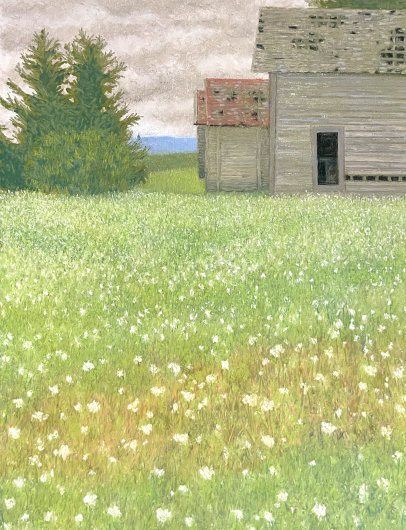
I first came across the work of Tim Blackwell when I was jurying and judging the Northwest Pastel Society Members Show in September 2025. His painting Rising Tide II stopped me. I found myself going back to it again and again, and it eventually went on to receive an Honourable Mention. (You’ll see it further on in this post.)
That small painting says so much. A decaying building. The beauty and unstoppable force of nature. The sense of time passing. A quiet story unfolding. It all spoke to me.
Now, reading Tim’s own description of the painting, I realised that what I had sensed in the work was very much what he had intended: the slow reclaiming of what had been left behind, the stories held in rural places, and his desire to preserve what once was.
That’s one of the things I love about Tim’s pastels. They are not just depictions of rural places, old buildings, fields, roads, and weathered structures. They carry memories. They speak of tenderness. They ask us to slow down and notice what might otherwise be overlooked.
In his guest post, Tim Blackwell shares his journey back to art, his love of soft pastel, and his belief in creating from “Heart Speak” rather than “Art Speak.” It’s a reflective piece about listening to your own creative pull and trusting the scenes that speak to you.
About Tim Blackwell
Tim Blackwell, born in May 1953, is an American contemporary artist based in McMinnville, Oregon who works in soft pastel. As a primarily self-taught artist, he has strived to develop a unique personal style well suited for portraying the rustic beauty of the Pacific Northwest’s farmlands, vineyards, rural landscapes and coastal scenes.
His love for the medium is evidenced in his detailed work which skillfully melds elements of a lifetime of learned experiences, memorable stories, and the quiet rural surroundings which he is blessed to call home.
He is an active member in the Northwest Pastel Society, Pastel Artists of Oregon, and Artists in Action organizations. Be sure to check out his newly created website here.
And now, here’s Tim Blackwell!
~~~~~
“A passion lives within us all…a gift from God…our beckoning call. Close your eyes so you might see…the glowing ribbon in the trees…burning embers fanned by dreams…often hidden…out of reach. Doubt and fear and disbelief…afraid to trust the quiet voice that never sleeps. Dream a dream and make it true…a gift from God meant just for you.”
For 73 years now, a love and passion for seeking out, appreciating, and creating art has simmered inside me. The glow of that internal fire over the breadth of my life has varied from a flicker of light seemingly destined to be extinguished by the demands of leading a self-perceived responsible “adult” life, to a wild fire, currently burning bright and unbridled with the excitement of what might be possible to achieve.
The irony for me is that, in retrospect, my personal artistic candle has burnt brightest at each end — when I was a very young child first realising that I loved to draw, a passion that grew stronger through my school, teen, and young adult years, and now, in my retirement years, when I once again have the time and freedom to revisit and chase those childhood dreams of wanting to be an artist when I grow up.
Keeping the candle lit
In the years between, I always managed to keep that candle at least dimly lit by finding ways to feed a creative need that never totally left me. During my working years, between the demands of serving a term in the Air Force, attending college, holding down a full-time job, raising a family, and doing life, I found time to create graphite and charcoal drawings, pen & ink pieces, and coloured pencil work, most of which were tightly composed, detail-oriented drawings.
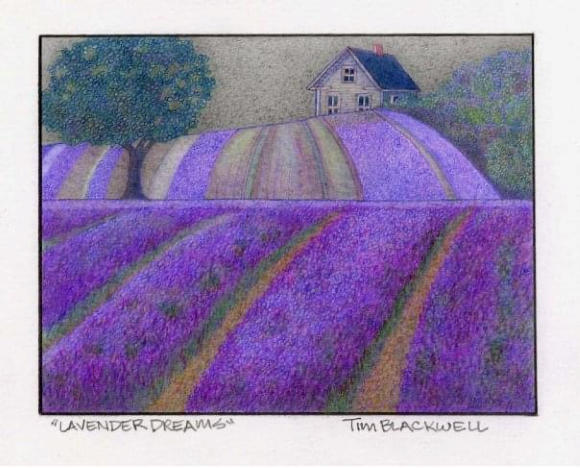
Those early pieces, which evoked childhood memories, had a nostalgic feel to them, reflecting simpler times and the rural life I continue to yearn for, having grown up in Willamina, Oregon, USA, a small northwest logging and farming community.
My sense is that this detailed style, tight composition, and ongoing love for familiar subject matter such as farmhouses, barns, rippled tin sheds, rustic work trucks, and rural landscapes continue to have a strong influence on my current pastel paintings.
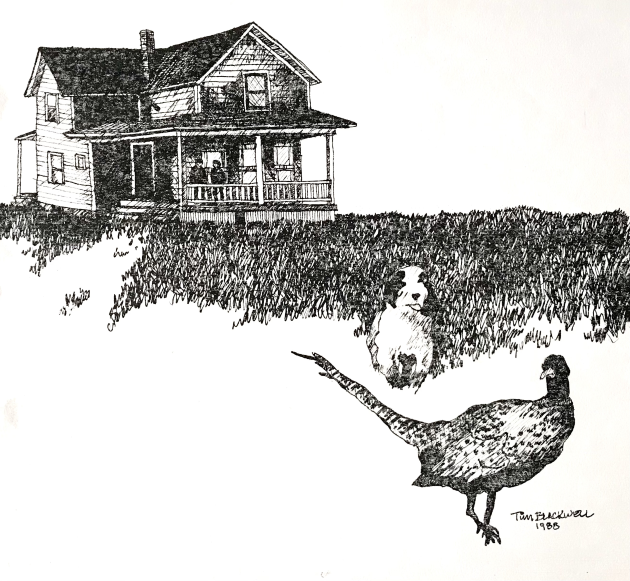
In years past, I sporadically participated in local art fairs and holiday events. Meeting other artists, I felt as though I may have been blessed with the raw talent capable of producing work people would appreciate and which I would feel good about sharing.
Despite receiving encouraging support and positive viewer reaction towards my artwork, I repeatedly chose to ignore that quiet voice, that dream of committing to becoming a full-time artist.
Instead, I elected to play it safe, doing what I felt was the responsible “adult” thing: continuing the grind of holding down a job, securing benefits, and assuming increasingly demanding levels of responsibility at work. Sound familiar?
I had knowingly muted the play button on my artistic pursuits while pouring my time and energy into what would become a successful, often stressful corporate Human Resources (HR) career. There was no shame in that choice. Many of the decisions I made were prudent and responsible ones for myself and my family.
Still, my artistic flame continued to flicker ever so softly in my dreams and in my persistent thoughts of “what if.”
The “what ifs” return
What if I was able to commit that same time and energy which I had been expending on my corporate career into creating art?
What if I learned how to create work with the rich, vivid colours available with soft pastels, which I had long dreamed of working with?
What if I participated in live pastel workshops offered by favourite pastel artists whose work I had admired for years?
What if I was able to grow, learn, and develop my pastel skills to a level that I could feel confident enough about my work to share it online for others to see?
What if…
When Gail reached out and offered me this opportunity to contribute a guest artist post for her “How to Pastel” Blog, I was very excited, honoured, and somewhat frightened to do so. A myriad of “what if” questions, like those I have mentioned, immediately flooded my mind. I had to take a deep breath and fight off the urge to take the easy way out by declining the offer and giving in to the negative thoughts that can rob us of our confidence and convince us that we aren’t skilled enough, experienced enough, or deserving enough yet.
I never could have imagined that, at this stage in my journey working with soft pastels, I might be given a “voice” from an accomplished and respected artist like Gail to share with other aspiring artists who may need a gentle nudge to take similar risks, believe in themselves, and trust in their potential.
I wondered if accepting this challenge, sharing my self-doubts, and showing samples of my work might offer encouragement to other artists in the early stages of their pastel journey. Maybe it would help them believe that good things really can happen when you keep following your passion and trusting that quiet voice that never sleeps.
After deliberating briefly on this opportunity, which had so graciously been offered to me, and chuckling at visions my overly active imagination conjured up when asking myself, “What’s the worst that could happen?”, I took a leap of faith and quickly responded to Gail with a “YES…I can do this and I will gratefully commit to getting it done for you!”
Painting in the final chapters
As a primarily self-taught artist, I’m at peace with acknowledging that I’m living out the final chapters of my own story. It has been, and hopefully will continue to be, a fun ride, filled with enough smiles, laughter, friendship, love, tears, creativity, and gratitude to make me a very happy man.
Recognising and accepting this has caused me to take a different path forward with how I approach the creation of my artwork than I may have done as a younger man. Time feels like my most treasured asset in this phase of my life. Time spent catching up with family and friends, quiet time spent holding hands and visiting with my wife Marilyn in our well-worn recliners, time spent in my studio listening to music while getting lost in my paintings.
I feel more relaxed at this stage of my life. I don’t have to rush. I’m enjoying my life and the circle of people with whom I share it. I am not creating my artwork with the goal of impressing others or seeking out recognition. My artwork is not a job. I don’t have to rely on it to survive financially, one of the perks, I suppose, of having made those prudent “adult” decisions during my working years.
I create my artwork because each step of the process brings me joy and a sense of peace and satisfaction. I’m hopeful that when I’m gone, my artwork and musings will continue to live on and share the stories I’ve captured.
“Heart Speak” vs. “Art Speak” – Creating from Within
I respect and deeply admire those artists who have dedicated the time and effort into learning and putting into practice colour theory, mark making, value studies, underpaintings, journalling, and all the other practices that help artists hone and refine their skills and technical knowledge. I recognise the inherent value of understanding the important role these topics and processes can and should play in how we approach our work.
Having said that, I have to unabashedly admit to not being very fluent in what I think of as “Art Speak.” I’m choosing to be honest and up front about this so that I can resist the urge to try and use AI tools or cleverly rework the words of other more formally trained artists on these subjects in a vain effort to falsely impress you. I’m certain that it would not take long for you to see through the façade. I take pride in being honest and valuing my integrity.
At my age, I don’t want to be overly concerned with technical terms or processes which can, quite honestly, sometimes seem confusing and overused. I want to enjoy the simple pleasure of being at the easel, picking up a stick of pastel and getting my hands covered with pastel dust while marvelling at the way that the colours can blend and meld and come together to result in a pleasing marriage of soft and hard edges and soothing hues.
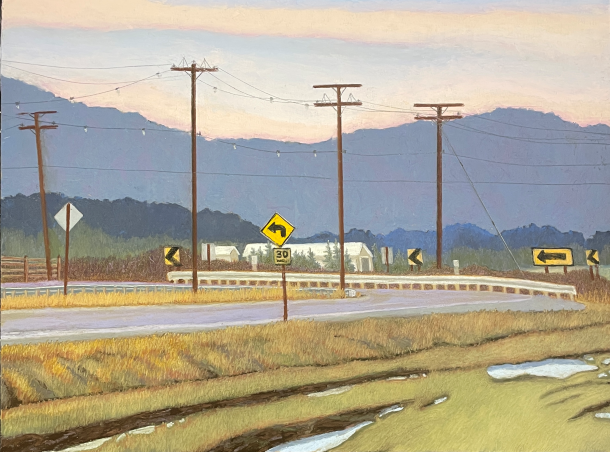
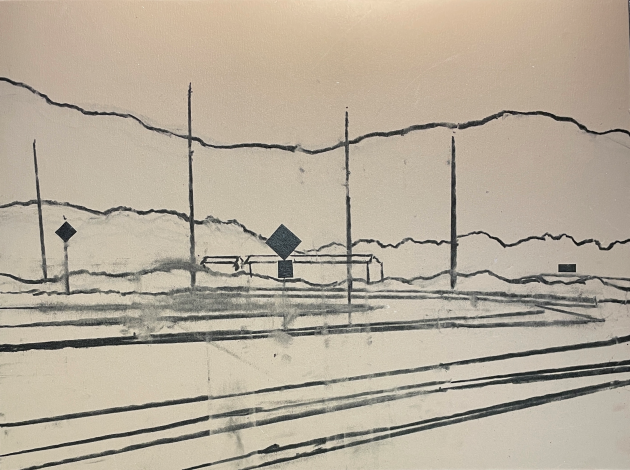
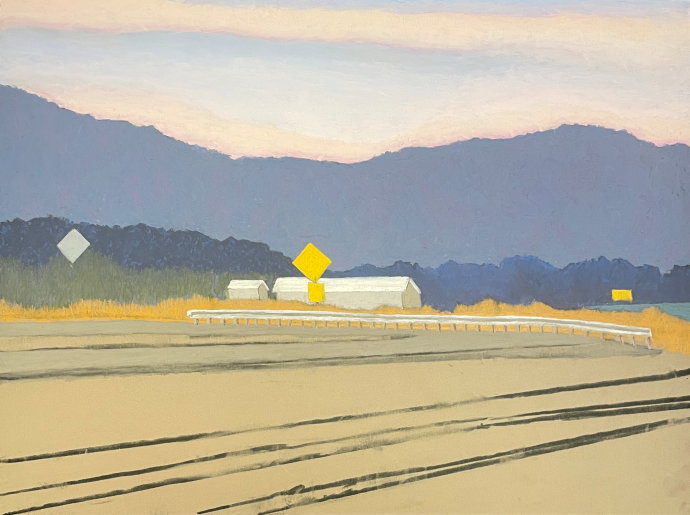
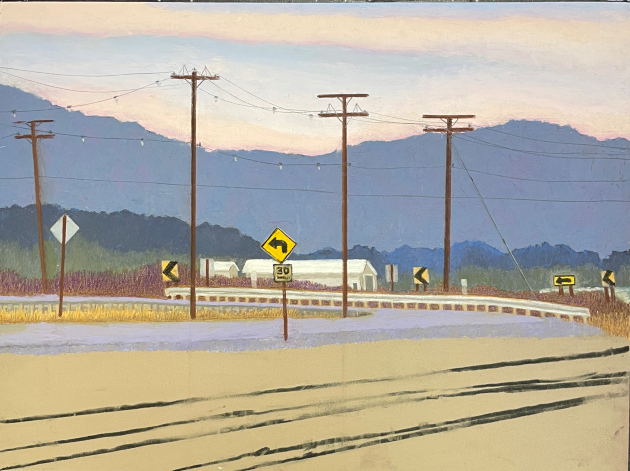
In that creative moment, I don’t feel a need or a desire to know how to explain all of the “whys.” I want to simply enjoy my time painting, relying on my past, present, and future experiences and artistic intuition, which I have been calling upon since childhood. The child in me still loves to draw and paint, and retaining that love is what matters most to me.
My memories of the experiences and emotions evoked at the time and place I first came across scenes I’m painting help to guide me in bringing them to life in the vibrant beauty that only soft pastels can convey. I replay those memories, now living in my mind, searching for the story present within each scene. In many instances, I have envisioned what the finished pieces will look like in my imagination for days, weeks, months, or sometimes even years prior to ever painting them.
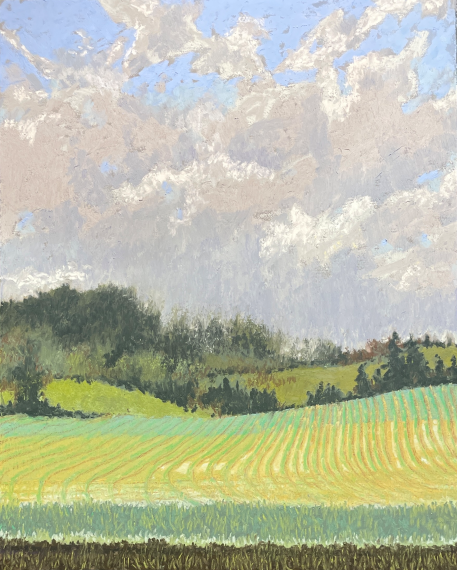
Finding the story within a scene
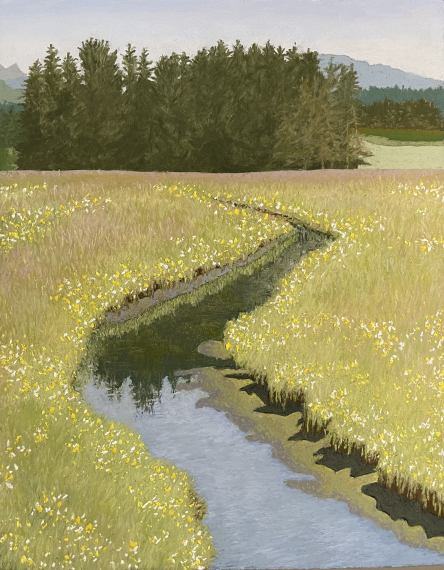
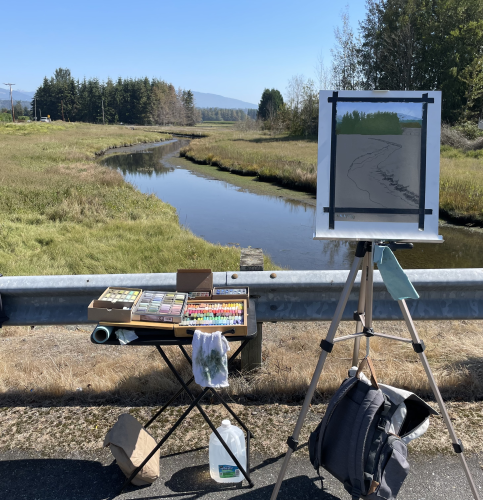
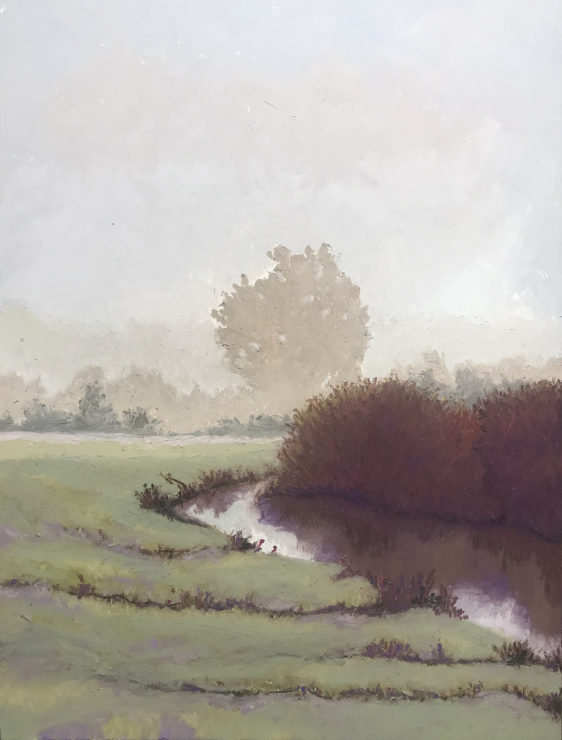
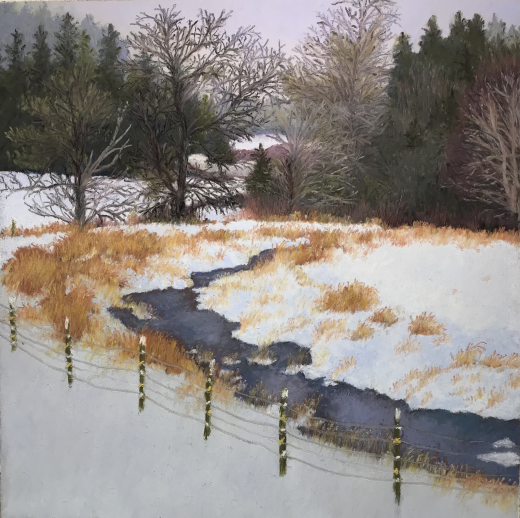
My pastel painting, Still Waters, serves as an example. Based on a reference photo I had taken in a rural area just outside of Salem, Oregon, it depicts a slow-moving creek with dry blonde windswept grass-covered banks and dark shadows cast across the water from the adjacent trees. It immediately captured my imagination. The memory of experiencing the cool breeze and the pleasant, quiet surroundings I had observed that day continued to live in the back of my mind for years.
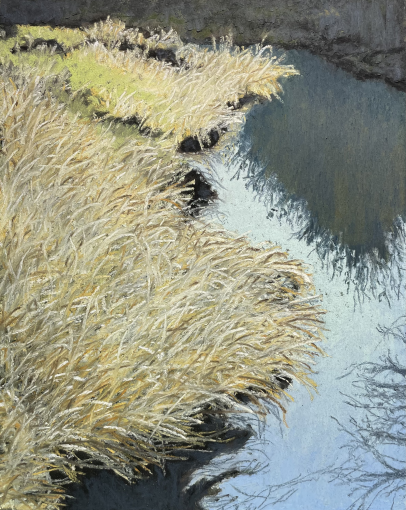
I always knew I would eventually paint it. I had decided on the title I wanted to use and the story that the painting was telling me years before: “Still waters canvas…hushed and calm…mossy greens and golden blonde…soft pewter skies…adrift on mirror…nature’s brush strokes blend and blur.”
Once I felt I’d reached a point in my progression and confidence as a pastel artist, and could do the scene justice and bring it to life the way I remembered it, I transferred that captured moment into a soothing finished painting. The satisfaction and gratitude to God for letting me revisit that scene all over again through my long-anticipated painting was very rewarding.
I have endeavoured for some time now to consistently practise what I think of as “Heart Speak,” selecting only those truly heartfelt scenes and remembered experiences to paint, ones that I feel a genuine, deep connection with. Seeking out and photographing such scenes while still in the midst of my corporate HR career provided me with the creative bridge I needed at that time to keep my spirits up and my artistic dreams alive.
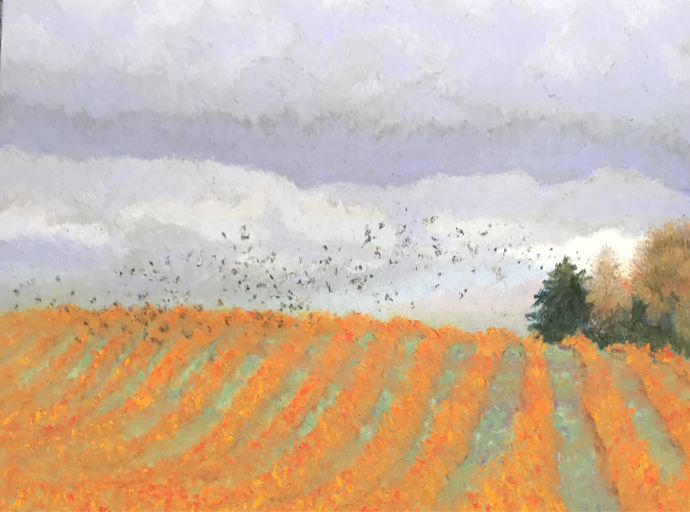
Building a large collection of inspirational photographs to work from, well in advance of retiring, felt like being one step closer to bringing those dreams within reach.
I knew I was 100% all in on my goal of wanting to learn to paint with soft pastels once I retired. Susan Day, a local Yamhill, Oregon artist whom I had long admired, first sparked my interest in soft pastels with her beautiful, soothing pastel paintings of glowing landscapes, vineyards, and rural scenes. I was instantly hooked and wanted to learn more.
I quickly discovered the joy to be found working with my digital photos, searching for the heart and soul of each scene, cropping, highlighting, and tinting them to reveal an end result both pleasing to the eye and true to the finished painting I visualized. While editing my photos, I tried to be sensitive to the natural beauty of the subjects, keeping artistic changes minimal.
I have long wanted to develop a unique style, well suited for my choice of rural nostalgic subjects, which people familiar with my work would be able to easily recognize. I wanted each of my paintings to be soothing, pulling the viewer deep into the scenes, sharing with them the stories that are held within.
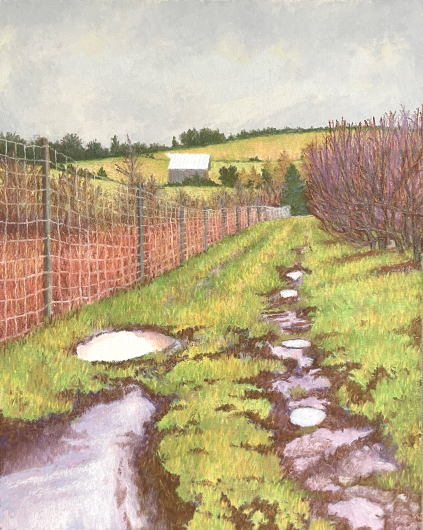
With my painting, Rainy Days & Mondays, I was inspired to depict a wet, muddy, rut-filled tractor path lined by a filbert orchard on one side and a tall wire fence line on the other. An old barn can be seen in the distance resting on the hillside. My goal was for the painting to entice the viewer, in their imagination, to put on a jacket and travel with me down that muddy path, being careful to avoid the puddles, eventually making their way to the barn on a wet, rainy Oregon day.
For as long as I can remember, I have felt like I may be seeing things in a different way than others, sensing subtle details and interactions to be found somewhere between the obvious and the quiet elements of my surroundings, things others may have overlooked. My mind, even as a child, was viewing the world through imagined stories triggered by my life experiences and visual cues, all around me, hidden in plain sight.
I have long wondered if such is the life and the vision all artists share, consumed by a common passion to see and feel what others do not, compelled to share that gift in the form of their drawings, paintings, writing, and countless other artistic means. These ideas are etched within their hearts, waiting to be released.
I find myself constantly thinking about creating art, either pondering the inspiration and choice of subjects for my next painting or visualizing the remaining steps required to complete a piece patiently waiting for me at my easel.
It’s not uncommon for me to make a trip upstairs to my studio late at night when the house is still and quiet and my wife has already gone to bed, to take one last look at a painting that’s in progress. I sit back on my stool, contemplating the next steps or changes to be made. More often than not, those thoughts follow me to bed, so I can awaken with a game plan in mind.
Seeing a painting through from start to finish can be a very deliberate and mindful process, requiring a part of myself to be deposited into each one. Looking at my finished paintings can be, for me, like gazing into a mirror of sorts with pieces of myself — my time, my energy, my own unique mark-making style and approach, and a little piece of my heart — all looking back at me from the finished piece, a painting which previously had only existed within my thoughts and dreams. It’s no wonder that it can be so hard at times for artists to let work go home with somebody else.
Preserving what once was
I find it satisfying when I’ve effectively shared with the viewer the feelings I sense from the subjects. For example, trying to depict with pastels the determination and emotions present within the sagging frame of an old farmhouse or barn, stubbornly resisting gravity and Mother Nature’s unforgiving efforts to pull them down into the soil that they’ve stood on for years and years.
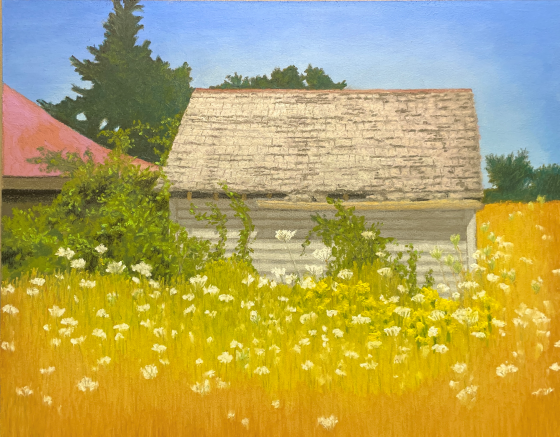
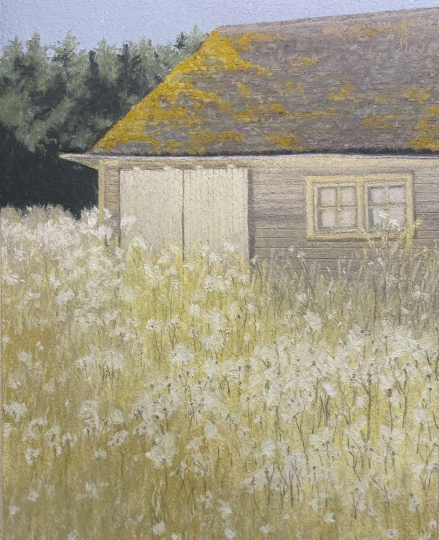
My painting “Rising Tide II” captures one such struggle: a decaying old wood-sided garage slowly being overtaken by the ever-advancing stranglehold of brambles and blackberry vines surrounding it.
I tried to suggest enough detail of the tattered, crumbling, weather-worn shingles in disarray on the sagging roof to convince the viewer of the fate awaiting this frail old building. The silent battle between the ever-rising tide of unkempt grass and leafy brush, Queen Anne’s Lace, and clinging vines that climb and overtake the once pristine lines of the structure, can be felt in your heart.
A motivation for choosing such scenes is to preserve what once was for those who never knew them, bringing to mind the familiar quote by Margaret Atwood: “In the end, we’ll all become stories.” In the absence of those who might still be available to share them, I want these stories to live on in my paintings.
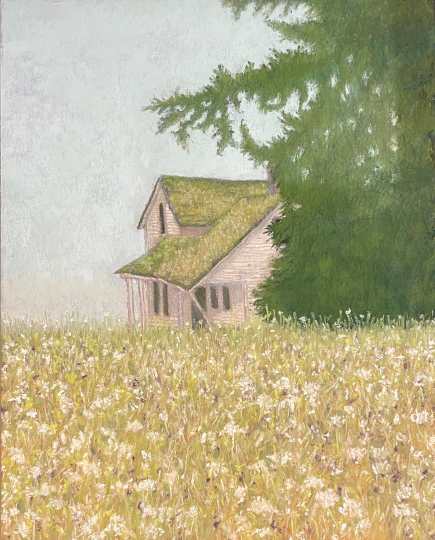
Sweet Dreams and Faded Memories (seen at the start of this post) each depict similar storylines of time marching on. Both paintings are intended to capture the last chapters of an old iconic farmhouse located outside of Amity, Oregon. Once filled with laughter and the chatter of a family who called it home, its inevitable ending had already been written with the unrelenting passage of time. Capturing such moments in quiet, peaceful compositions is a challenge that I welcome.
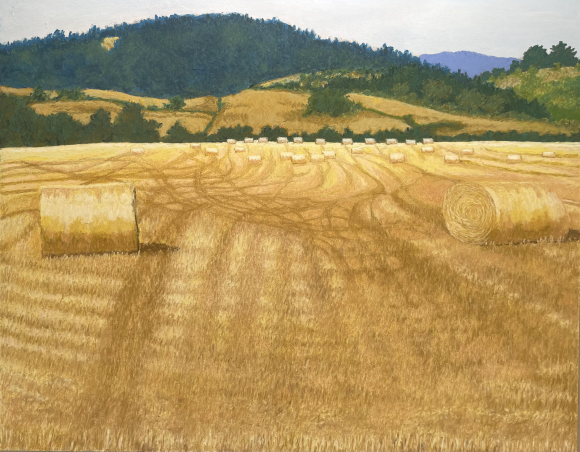
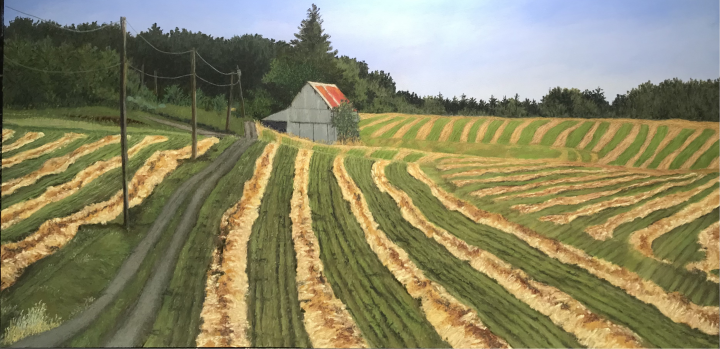
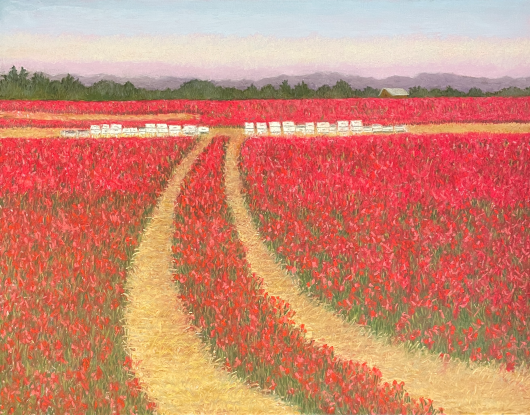
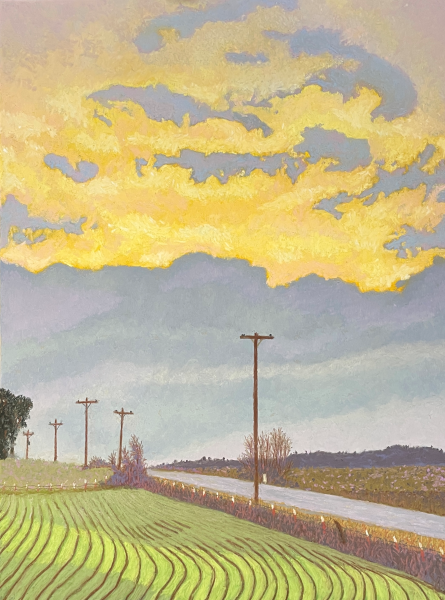
Many of my paintings share much happier themes. Golden Harvest (this post’s feature image) and Stubble & Gold tell their stories within the rolling hay fields. The sights, smells, dust, and scurry of farm equipment, sometimes operating late into the night, is something I look forward to each summer. The hillsides are etched with evidence of the farmer’s toil, with rows and rows of bright golden hay and stubble riding the contours of the land. A bird’s nest of intersecting and overlapping tire tracks are left behind by the various tractors, combines, and flatbed trucks assisting with the harvest, sewing the landscape into a textured quilt of stubble and gold.
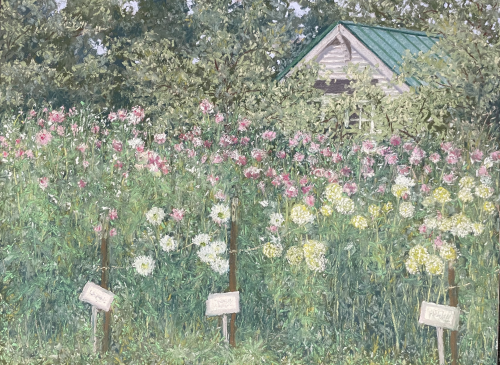
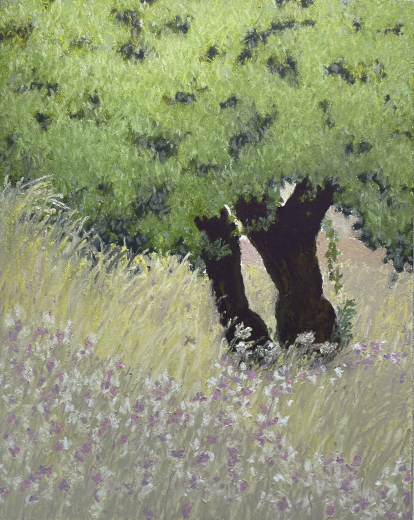
Fragrant Memories invites viewers to stop with me at a local fresh fruit and vegetable shop, spending long enough to fill a bag full of organic local produce and pick a fresh bouquet of fragrant dahlias from the rows of soft yellow, white, and pink flowers beckoning from the adjacent flower garden. The aroma drifts through the afternoon air, leaving visitors with a smile and hopefully transporting them to a restful time and place, if only for a moment.
My hope is that my artwork, personal story, and reflections will trigger a desire in you to also search for those scenes and stories which speak loudest to your heart and then dare to capture them in your paintings. Keep your childhood dreams alive, go ahead and colour outside of the lines, and have fun painting what you love. Dream a dream and make it true…a gift from God meant just for you.
*****
Thank you, Tim, for sharing not only your work, but the story, heart, and memories behind it. And thank you for saying “YES!”
What I love about Tim’s reflections is the reminder that our art doesn’t have to come from a grand, complicated place. Sometimes it begins with a quiet pull. A remembered scene. A place we can’t stop thinking about. A childhood dream that never entirely went away.
I’d love to know what resonated with you. Are there places, memories, or subjects that keep calling you back to paint them?
Please leave a comment below and let Tim know what you’re taking away from his story and artwork.
Until next time,
~ Gail
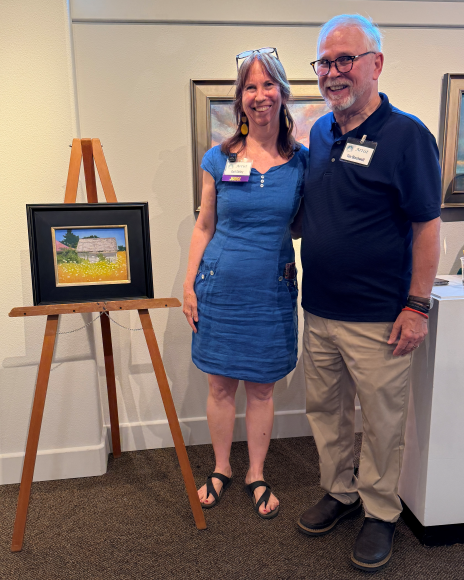
PS. Here’s Tim and me with his award-winning painting!











23 thoughts on “Tim Blackwell – The Quiet Voice That Never Sleeps”
Tim’s use of color and his use of pastel sticks and pencils is inspirational. He beautifully invokes the mood for each scene.
Yay Mary! Thank you so much for sharing your thoughts. I’m sure Tim will be pleased to hear that.
Thank you so much for your kind words Mary…I genuinely appreciate it. I was grateful to have been given this opportunity to share my thoughts and work with others.
Tim Blackwell
I love to hear from other artists who are self-taught, who aren’t fluent in ‘Art Speak’. Who get pure joy out of what they do…I can relate!
Isn’t that just marvellous Curtis?!
It’s interesting that when I ask an artist to contribute a guest post, often I know very little about their art journey and it’s always a wonderful revelation!
Thank you very much for being able to relate Curtis…I was hoping to be able to reach other artists who have traveled down a similar path. Creating artwork has long been a source of quiet and solitude, a place to get lost in the work for me. That’s been true since my childhood. I appreciate hearing from you!
I love your work and your blog resonated with me. I too began seriously painting when I was older. I took it up as I was working for my church and hearing such sad stories. I needed something to take my mind off what I was hearing. I now run workshops and sometimes do commissions. It is a God given gift that has given me so much pleasure.
Love hearing your story Dee and that Tim’s own journey resonated with you. Thank you!
Thank you very much for sharing Dee! I am very happy to hear that your passion for creating your art came at a time in your life when you most needed it. We seem to have that in common. Wishing you continued enjoyment with sharing & pursuing your artistic endeavors!
Thanks so much to Tim for sharing his beautiful art pieces with us as well as the stories and feelings behind them! Very inspiring! And thanks, Gail, for introducing us to Tim. Your blogs are always very interesting and fun to read. I enjoy them so much!
That’s soooooo great to hear Debbie!!! And it’s so much my pleasure to introduce Tim Blackwell’s work to those who don’t know it….yet.
Thanks so much Debbie for reaching out. It makes me happy to hear that you enjoyed my work and my thoughts associated with the creation of my paintings. I am honored to have had this opportunity to share a snapshot of my story with other artists who share a common passion for working with pastels. Wishing you the best!
Congratulations Tim, for your excellent work which I have long admired and for bravely accepting the challenge of expressing your story so eloquently for us to share.
Your words are as colourful, meticulous and as honest, as your paintings.
The parallels with my own journey are too numerous to mention, nearly every word struck a chord, it made me smile to think that we share the same happiness through our art.
Ooooo Gareth, thank you for such a thoughtful and warm response to Tim’s guest post! I particularly appreciated when you said his words were as honest as his paintings. Indeed!!
Thank you for making my day with your heartfelt response Gareth! It means a lot to me to hear from you…I am a long time follower of your work and to learn that you enjoyed my paintings and my story feels wonderful! I have to admit to having had some reservations about speaking so honestly but felt it best to follow through and speak from the heart. I feel blessed to have been given this opportunity by Gail…it has been a real shot in the arm for me! Wishing you the very best and thank you for the kind words!
Thanks so much for your heartfelt comments Gareth! You made my day…I have long been a fan of your work & to learn that you enjoyed my paintings & my article means a lot to me. I am happy to know that we have had some similar experiences along the way! Wishing you could tinted success!
Thanks so much for making my day with your heartfelt comments Gareth! I am delighted to know that you enjoyed my paintings and my article…that means a lot to me. I have long enjoyed and admired your work and I am happy to know that we seem to have some shared experiences in our art journeys along the way! I really appreciate you taking the time from your busy schedule to reach out…I have to admit to having had some reservations with being so honest about some of the things I shared in my article but i felt it best to speak from the heart. I am grateful to Gail for giving me this opportunity to share…it has been a real shot in the arm for my confidence. Wishing you the very best going forward!
I am so glad I read Tim Blackwell’s post on your blog Gail, thank you for introducing us to his beautiful work.
And thank you so much Tim for sharing those insecurities…. I was sitting here kicking myself for saying ‘Yes’ to a creative opportunity a few hrs ago which is way out of my comfort zone especially after a year or 2 of becoming rusty… I woke up in a panic and and decided to read this post. I related to so much. Firstly I love your work, the nostalgia, there is a sensitivity and love for those places and seasons that comes through in your work. And soothed me as much as a walk in the field. Thank you for taking us on the journey. Particularly in this season when time is so precious. I relate to that too choosing time to paint or spending time with family and walking into the studio when the house is quiet.
I have those personal reference photos I keep promising myself I’ll paint, duck pond memories etc and looking at your work reaffirmed that I need to paint the pictures and memories that matter to me rather than being concerned about what other people want to see, or even what is real art. To paint for the joy of it and the love of the stories that will remain in our work and will shine in your work.
Thank you, for showing us your treasures.
And for encouraging us to stay humble and not to get caught up in the snooty side of the art world or take ourselves too seriously.
And above all – not to run away but to be our authentic selves and to have the courage to share those paintings and the character to keep painting them.
Ohhh Melanie – thank you so much for letting us into a little part of your art world and for your warm and heartfelt response to Tim’s guest post!
Gail, you will be delighted i didn’t just get ‘inspired’ after writing that comment I got up and did the thumbnail and preparatory sketches, and started planning 2 of my bucket list paintings.
Brilliant!!! And yes, you’re right – I am delighted!!
Thanks so very much Melanie for reaching out & responding to my guest post. It makes my heart happy to know that it made a positive impact on you & your personal art journey. Your kind words are genuinely appreciated & I wish you the very best going forward, painting those scenes that speak to your heart…have fun chasing your dreams!
Thank you, Tim.