
Michael Freeman – do you know his work? I’ve admired Michael’s work for what seems like ages. I also admire his deep commitment to the craft of painting. So when the opportunity arose to invite him to contribute a guest post, I expected we’d be talking about painting – process, realism, or his love of detail.
Instead, Michael arrived with something quite different — and incredibly generous. A clear-eyed, experience-rich look at the realities of entering art competitions: the highs, the disappointments, the lessons learned, and the resilience required along the way. I can’t wait to share it with you!
Michael Freeman Bio
Michael Freeman is an international award-winning pastel artist from New Zealand, recognised for his hyperrealistic style. He is an Eminent Pastelist of IAPS (IAPS-EP) and a Master Pastelist with the Pastel Society of America (PSA-MP), the Pastel Artists of New Zealand (PANZ), and the Pastel Society of Australia (MPSA). He holds a Master of Fine Arts degree from University of Illinois, USA.
Inspired by photographic journeys through New Zealand, Michael’s work ranges from still lifes of iconic objects to rural landscapes, weathered structures, and farm animals. He has exhibited widely in New Zealand and also internationally and has had his work featured in leading art magazines.
Learn all the details on his website.
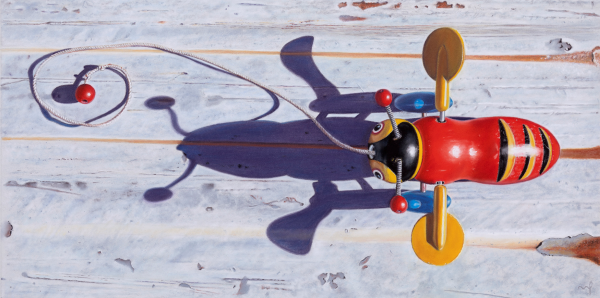
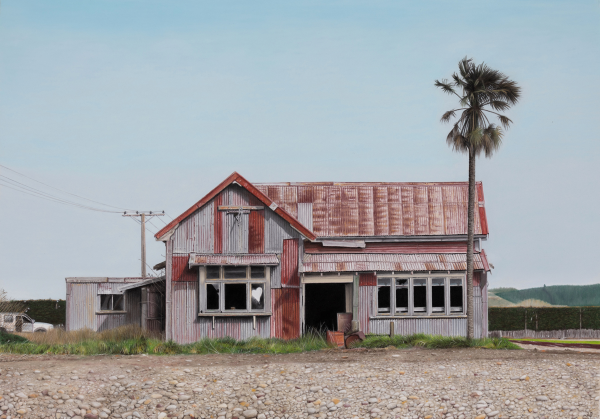
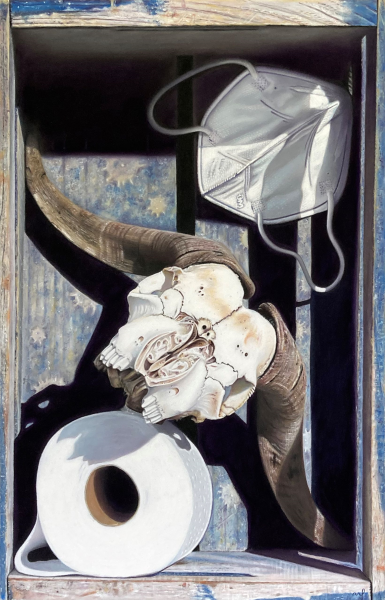
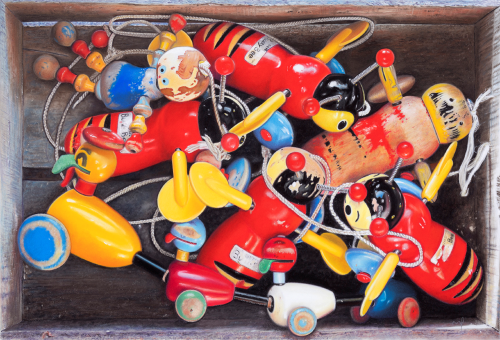
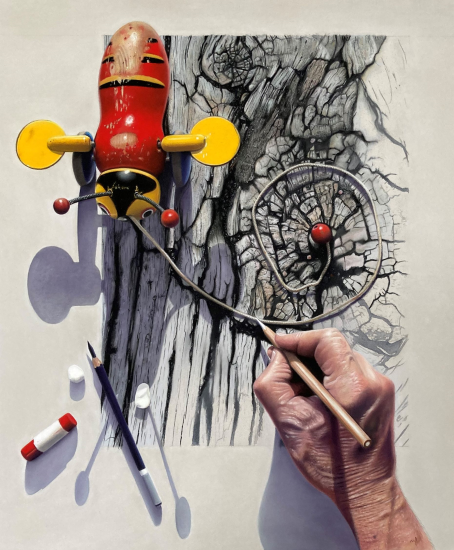
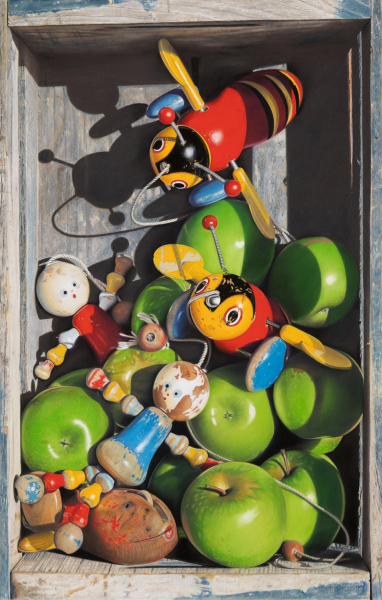
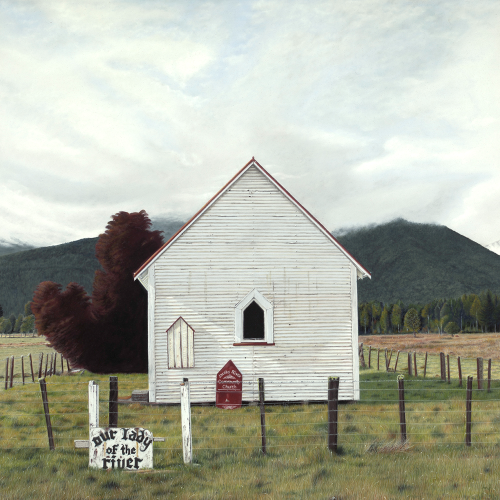
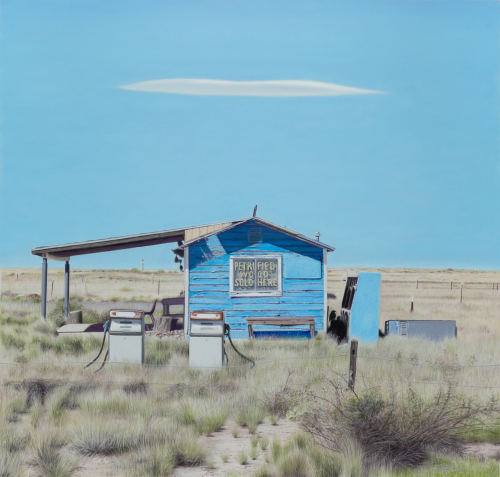
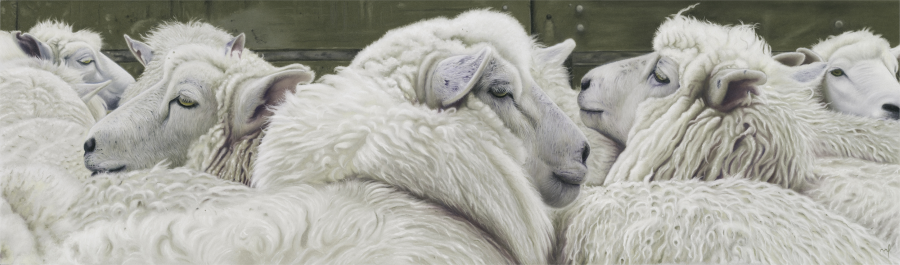
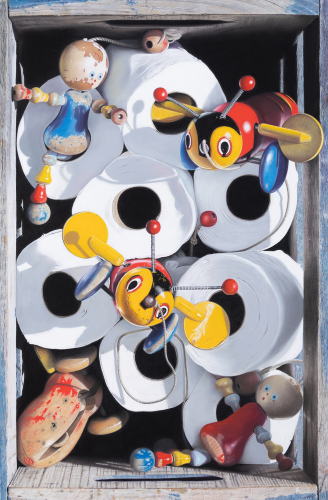
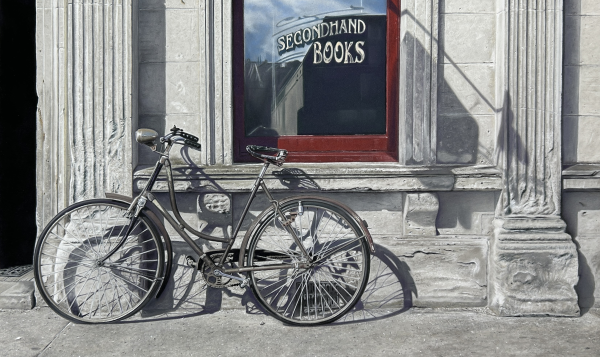
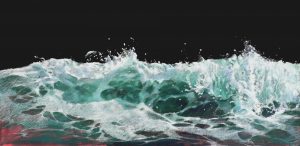
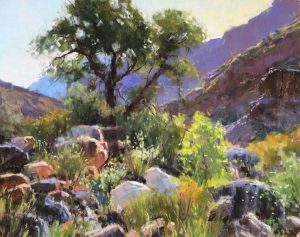
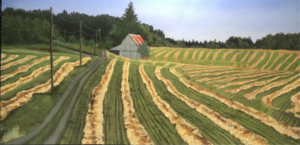
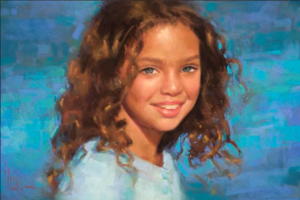
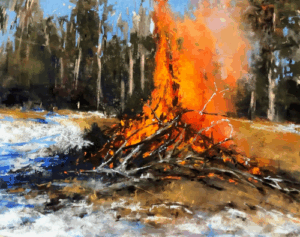
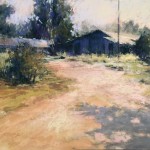
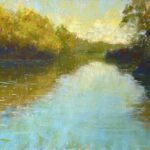
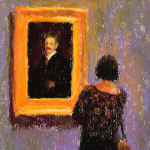
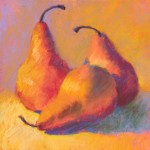
And here’s a taste of his work!
And now, here’s Michael Freeman!
*****
Participating in competitions is not easy. Definitely not for everyone. Personally, I would say if you felt that entering competitions isn’t for you – then don’t enter!
Whatever your personal opinion – it’s right. Do not assume, however, that it’s right for everyone.
Competitions are like climbing mountains. The higher you climb the harder they get! Also, when you finally get to the summit, it’s only then that you can fully appreciate that it isn’t the end of your journey. It simply is the new vantage point from which you can see your next mountain to climb.
WARNING! Only read further if:
- you’re on the fence about whether or not you should put your work into a competition or
- you’re interested in taking the plunge and seeing whether competitions are for you or
- you’ve entered competitions but could benefit from new helpful insights
What follows is not right or wrong but thoughts based on my firsthand experience.
So now that only those of you who’ve some interest in entering competitions remain, I will share with you my personal insights on the following:
- Competition Basics 101
- Suggestions to help your chances of being accepted
- Tips for handling disappointment
- Miscellaneous thoughts/comments
Competition Basics 101
10 things that could be helpful………………………….
1. Baby Steps (crawl before you start sprinting)
Start at the bottom and work your way up
- small shows to bigger shows
- low cost $ to high cost $$$
- pastel-only to all mediums
- beginners to professional
- start locally, regionally, provincially, nationally, internationally
2. Paint what you love (what you’re passionate about)
I don’t create a painting for a specific competition. I select what competition/s I plan to enter when the painting is completed. I let the painting choose the competition/s.
If you decide, however, to create a piece of work for a specific competition, I suggest that you allow plenty of time so you avoid any unnecessary pressure. (That is of course unless you happen to thrive under pressure!)
3. Always only submit your best work
Note: If you have more than one piece, keep in mind that it’s important that the quality across all submissions is consistent.
4. Fundamentals are important
For your painting to have a chance of being accepted into a juried show – it must:
- Demonstrate a good understanding of all compositional elements
- Be technically proficient/competent
- Be a quality image (photograph)
5. Be realistic
Select shows appropriate to your skill level
6. Paint from your heart not your head!
Never try to paint for a specific judge/juror. Equally, if you know a particular judge has a genre/subject bias based on your own personal experience – don’t waste your money.

7. Always read the prospectus carefully
It is important that you fully understand the prospectus (show/competition guidelines)
After you have read them, then read them again. Show parameters will vary year to year and show to show.
Note: Please pay special attention to the image requirements (size, dpi, format, etc)
8. Check framing requirements
For a physical show – make sure that you check the framing requirements and make sure that your painting is framed professionally.
9. Build on success
Grow and build on your successes. Initially your goal will be to have work accepted. Then, over time, your future goals will continue to change, to be more in line with your achievements.
10. Have FUN!
Always have fun.
Suggestions to increase your chances of being accepted
1. Do your homework/background research
Look at the work accepted into previous shows (quality and quantity)
However, try not to make assumptions. For instance a judge who is an abstract artist may/or may not lean toward their own genre. It does pay to record and be aware of any bias that you experience personally (subject bias, genre bias, Juror/Judge bias, etc) or that you notice.
2. Helpful questions to ask yourself before entering into competitions
Does your painting:
- stand out from the crowd? (Is it memorable?)
- reflect your own personal voice?
- have something to say?
- have a wow factor?
- have visual impact?
- reflect a mastery of pastel
- make the viewer stop, pause, and look?
- reflect your passion for the subject?
- make the viewer look at a familiar subject with new eyes?
- demonstrate an understanding of the 5 Cs?
(Composition, Concept, Colour, Contrast, Care)
3. Your paintings will be reviewed and assessed as a digital image on a computer. Be aware anything under 8 x 8 in (200mm x 200mm) will be viewed larger than the original. The digital image that you supply needs to be of high quality and to the requirements outlined in the prospectus.
4. Stay true to yourself and your style
5. Composition and narrative (story) are fundamentally important
6. Don’t underestimate the value of social media acting as a sounding board
7. Successful artists usually have some/all of the following characteristics:
- They take their own photographic references
- Have strong drawing skills
- Demonstrate a masterly technique (for their genre)
- Have a unique voice: composition; subject; story/narrative; style
- Are focused and driven
- Have developed resilience
8. Don’t solicit critique from friends, family, or peers who are only too happy to tell you what you want to hear.
You really need honest/positive feedback from a respected artist/mentor
9. Don’t look outward for answers – instead look inward and find your story – your reason for painting. Paintings with a message (story) often have a better chance of being selected. Paint for yourself first.
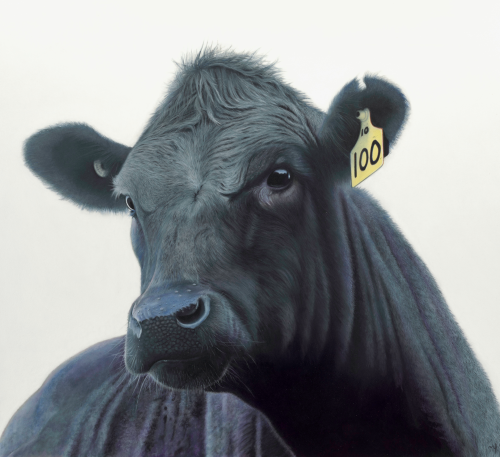

10. Accepted paintings are good at a distance of 40 feet, 4 feet, and 4 inches (the 40/4/4 rule)
11. As you progress it will be increasingly important to plan ahead, especially when it comes to understanding the eligibility rules for different competitions.
12. Competitions are getting more competitive and a lot harder to get into as the number and quality of artists entering continues to increase.
13. Titles can be important. They can add to the jurors/judges/viewers understanding of the piece. This is especially true when decisions are being made regarding awards.
14. Entering competitions can be:
- character building
- financially and personally rewarding
- can assist in getting your work noticed locally and internationally
- play a part in creating your own unique brand
- inspiring to artists to create better work
15. Learn to trust your own instincts – competitions aren’t for everyone. If you aren’t enjoying yourself or are finding competitions stressful – then consider taking a break or not entering competitions.
Tips on handling disappointment
1. One constant – not being selected happens to everyone
Remember it’s often one person’s decision (or a few people’s). On a different day with different people there would definitely be different results.
Also, the more successful you perceive someone to be – you can be sure that they have experienced heaps of disappointment. As they say – the higher you climb the bigger your fall!
2. Not being accepted or not receiving an award does not necessarily mean that your painting was not as good as paintings that were accepted.
(However, if a painting you believe in is consistently overlooked – then you should seek advice from a mentor/someone you respect to give you an honest experienced opinion/advice.)
There can be numerous reasons for paintings not being accepted including:
- limited numbers
- limited space
- not following the rules outlined in the prospectus
- subjective reasons
- amount of competition within specific subjects/categories/genres
- juror bias, etc.
3. Importantly, remember that not getting accepted into one competition does not mean your painting won’t be successful in another competition.
4. Not getting into an exhibition/competition hurts – it doesn’t really get easier. It’s important, however, not to take the rejection to heart!
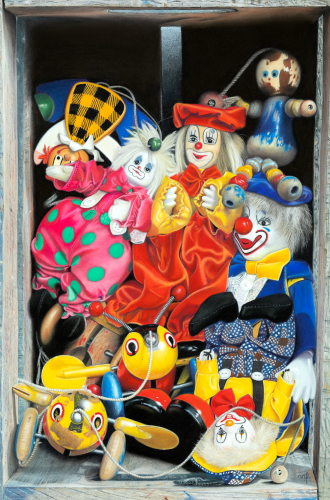
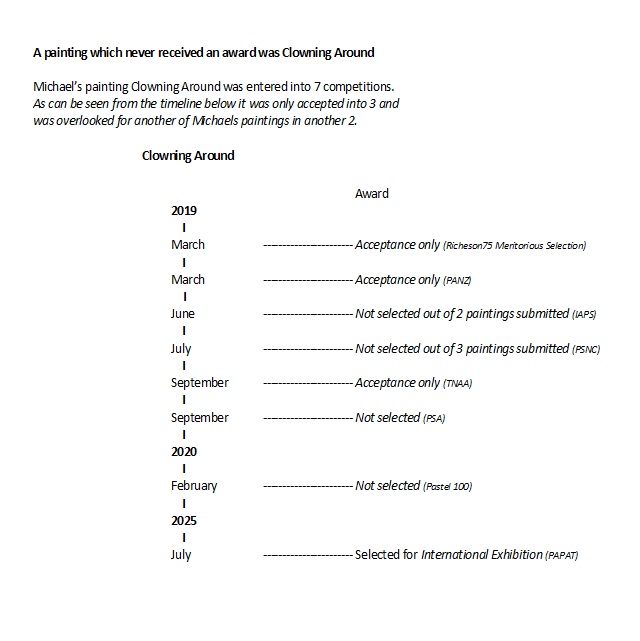
5. Never post your disappointment on social media – it’s never a good look!
At best, it appears as if you are looking for sympathy. At worst, you are questioning the jurors/judges choices/decisions. Instead, make an effort to congratulate those whose work was accepted.
6. If you don’t get accepted – allow yourself time to be disappointed and have a period of mourning (self pity) and then pick yourself up, dust yourself off, get back into your studio and back to work. Use your feelings as motivation to keep on painting and striving to improve.
7. Whether you get in or not, it’s always a great time to reflect and critique how you feel your work compares to the work by other artists that was accepted into the competition. Does your work sit comfortably in the bottom third, middle third, or top third? Ask yourself: what can I do to improve my artwork?
8. Remember to be careful of what you wish for – the more successful you are, the tougher the competition gets, and the bigger the falls!
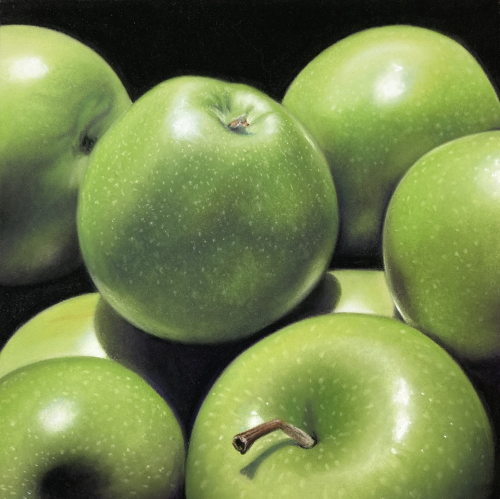
Miscellaneous thoughts/comments and FAQs
1. Shows can be a means to an end
Setting goals – short term/within days or weeks, mid-term/ within months, long term, within year/s – can enable and guide your art journey regarding what? When? How? Why? Where?
2. The cost of entering shows can be expensive
Shows can range from free entry to anywhere up to US$85.00 per entry (ie. ARC) and that doesn’t include any of the other costs such as materials/framing/shipping/etc. So it’s important to be organised, realistic, and to have a plan.
3. There are many places to see what competitions are available.
- Online sites like Show Submit and Online Juried Shows send out monthly lists of upcoming shows to which you can subscribe.
- Pastel Societies offer many national/international and online/physical shows
- Some competitions that I’m aware of and that are open to pastel artists include:
- Boldbrush Painting Competition (1 free entry per month/ all mediums)
- Pastel 100
- Richeson 75 (subject based/ all mediums)
- Dakota Arts (offers a quarterly competition)
- Artist Magazine Annual Art Competition (all mediums)
- Coloured Pencil Magazine (includes pastel pencils)
- Finally, my wife Julie and I also put out a quarterly newsletter called The Freemanz which has a section in it where we highlight upcoming competitions. (For more info, contact Michael here.)
4. MY CHALLENGE TO YOU – if you currently don’t take your own photographic reference images, start immediately taking your own photographic references!
I always encourage artists to start taking their own photographs as soon as possible.
When you take your own reference photographs, they are truly your own vision, your own composition, your own work! You’re taking 100% ownership of your own creative process – from conception through to completion.
Photography today is no longer costly and technically challenging – you do not need a lot of equipment or technical knowledge. Your mobile phone has everything that you need!
Taking a great photograph isn’t easy. It requires all of the same compositional skills that are required to create a great painting. That’s why taking your own photographs can positively influence your art.
Interestingly, everyone that I have encouraged to seriously take up this challenge has seen their photography improve – and so did their paintings.
More and more competitions require the artist to have taken their own reference image/s
5. What pastel societies should you join?
Start by becoming a member of your local pastel society. Do check first that they are affiliated with IAPS (International Association of Pastel Societies) If they are, you will automatically be able to participate in all IAPS activities and events.
Beyond your local pastel society, other memberships will be different for each artist and their own personal artistic goals.
6. Shipping your artwork?
This is a big question and varies considerably – depending on where you’re located and where you wish to ship your artwork.
Shipping will vary depending on where you are located relative to the show, the size of the work, which company you send with, etc. Reach out to someone who you know has experience in shipping pastel paintings – locally/nationally/internationally. Feedback varies with UPS and Fedex within USA.
+++++
After seeing his draft, I asked Michael if he would tell us something about his own competition journey which he kindly did and here it is.
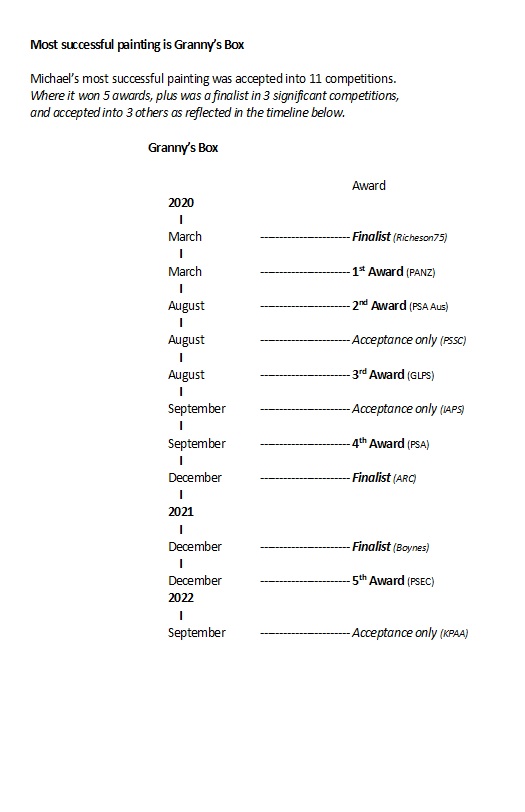
Michael Freeman’s first hand experience with competitions
My art journey started from birth. Art was in my DNA. Throughout my formative years, I always had art materials. My parents were always encouraging and supportive of my art, especially my dad who himself was a very talented amateur artist.
Undoubtedly I was the beneficiary of a dad whose parents hadn’t been supportive and encouraging with his art and he wasn’t able to follow his passion. When I was a teenager, my dad said that I should choose a career that I loved, as I would end up spending more time doing that than anything else, maybe except for sleeping.
My art journey wasn’t always straight forward or easy. At 15, I was one of the top students of my year in art. However, trust in a new art teacher resulted in art being the only subject that I failed at the end of year national exams. This could have been the end of my art journey.
Instead, it was the fuel for me to find another way to achieve my goal of gaining a place at the University of Auckland, Elam School of Fine Arts. This I achieved by choosing an academic pathway in my final year of school. After completing the introductory year at Elam where I initially wanted to be a painter, I pragmatically decided to major in product design.
Following the completion of my bachelor’s degree, I applied for a scholarship to study for my Master’s degree at the University of Illinois in the United States.
I then began a very successful product design career first in the United States, then Europe, and finally in my own design consultancy in New Zealand.
By contrast, my career in pastel only started in 2015 and is only 10 years young. However, my response to those who ask how long I’ve been doing pastel is always simply that pastel is an art medium and that I’ve been doing art for 68 years.
Similarly, I’ve only been participating in pastel competitions for a relatively short period. However, artists draw from their experiences and at 68 years old, I have had a lot of learning experiences.
The impetus to enter competitions came from witnessing my wife Julie Freeman’s success in gaining recognition as a Master Pastelist within the Pastel Artists of New Zealand (PANZ) in 2017 and then gaining Master Circle status with IAPS in 2018. Plus we recognised an opportunity to spend our later years focusing on our shared love of art, travelling, and teaching internationally.
However, for this to be possible, it was important that we both would need to have the recognition and honours internationally in addition to our pastel knowledge and skills.
Competitions are the foundation and only means of attaining honours and recognition.
Based on what I witnessed with Julie’s experience, I decided to focus my attention on gaining international recognition before seeking honours in New Zealand. At that time, the PANZ award system was extremely tough and a lot harder to achieve. (Fortunately, that’s no longer the case, as we were instrumental in changing the PANZ points system to one which was fairer and realistically achievable and consistent with international best practice.)
I established clear goals and focused on producing paintings for myself and targeting international competitions. Using social media and acceptance into online shows was a way of establishing myself as an internationally recognised pastel artist. This is very important when you live in a country at the bottom of our world in the Pacific Ocean.
Writing this blog was the first time that I have stopped to take a breath and actually reflect and look back on my journey from the perspective of competitions and the role they’ve played in my success.
From my first small local competition back in 2015 where I had a pastel painting accepted but didn’t receive an award, through to today – it’s been quite a rollercoaster ride!
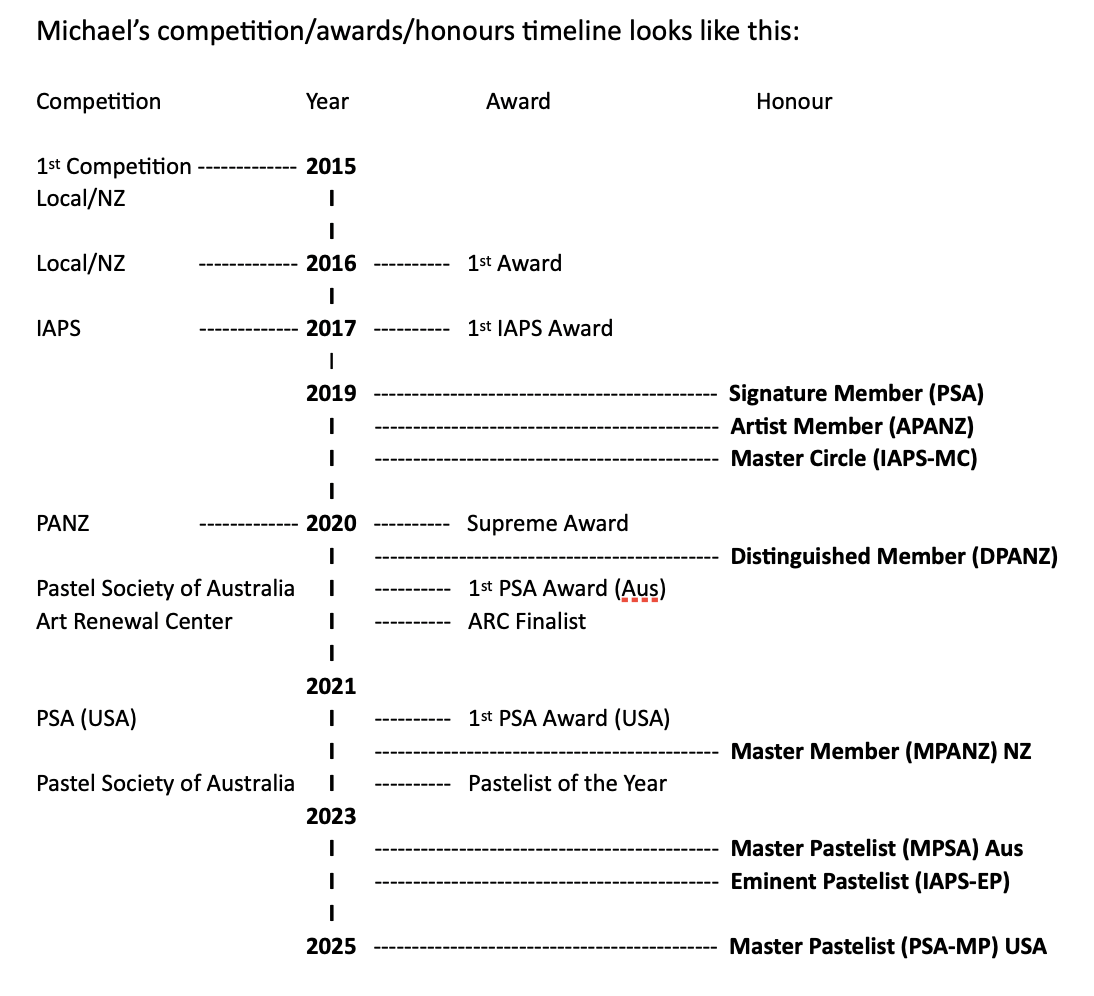
If you find the thoughts/insights that I’ve shared in this blog useful, please let me know by leaving a comment below.
I wish you all the very best with your art journey.
Happy pastelling!
Michael
~~~~~~
I’m very grateful to Michael Freeman for sharing his experience so openly and thoughtfully. He mentions his wife, Julie, in the post — and some of you may remember Julie’s own guest contribution here. One household, two artists, and a generous willingness to share what they’ve learned along the way.
I’d love to hear your thoughts. Have competitions played a part in your own art journey — for better or worse? Or are they something you’re still undecided about? Head down to the comments and join the conversation!
Until next time,
~ Gail











6 thoughts on “Michael Freeman On Surviving the Competitions Rollercoaster”
I loved this article! I’m a self taught pastelist, early on my journey (but in my 60’s), not needing to make a living at it, but working hard. I do sell, and have been recognized in competitions. HOWEVER, my interest is first and foremost painting farm animals, then native birds and occasional wildlife.
Although a member of a couple pastel societies I have accepted that my genre and style (realism), is not viewed as “true art” in the pastel world for the most part. I’ve not let it bother me and have focused on organizations and competitions that are a good fit for me. While I still enter shows, life is much too short to worry about recognition and awards. Having my paintings in the homes of clients is the best award of all!
Hi Lori, many thanks for sharing your thanks and thoughts about this whole idea around entering competitions and shows. I think there’s a cycle of appreciation of different kinds of art –style, subject – in the art world. What goes around comes around. AND, as you say, the best feeling is when someone loves your artwork enough to want to hang it on their walls!
Thanks so Michael Freeman of his incredible generosity in sharing both his insight and experiences. There were points that I had thought were obvious, but when put into context, everything was quite illuminating.
Happy Holidays to all and thanks for your support as well!
I know what you mean Sandy about some obvious points but put together the way Michael has done, they speak louder and in the whole picture of entering competitions. Happy Holidays to you too!
Thank you, both! This piece was so relevant no matter what one’s medium…I’ve strayed away from pure pastel to a combo of pastel and charcoal amongst other painting mediums, however, that is not what is the most important point. Getting recognition is more than just a pride issue…it does suggest that one’s work has a consistency about it and/or perhaps one is developing their own niche…all important to progression in one’s career! It is a given, one may not be a fit for any number of subjective and objective reasons; artists learn to roll with it. It is so encouraging to learn from those who seem to enjoy such success, that they have, and perhaps still do, take their lumps. Thanks so very much!! Happy Holidays!
Thanks so much for your understanding comment Nancy. YES! everyone has there ups and downs when it comes to show entries.