

Looking back at some of the pieces I painted while in La Manzanilla, Mexico, I noticed a quiet thread running through three of them. Without setting out to, I found myself painting figures in conversation — pairs of people together, talking, waiting, simply being. Two men standing side by side in the water as one fishes. Two men chatting on the beach. Two women in conversation. Nothing dramatic. Nothing posed. And yet, everything I needed was there.
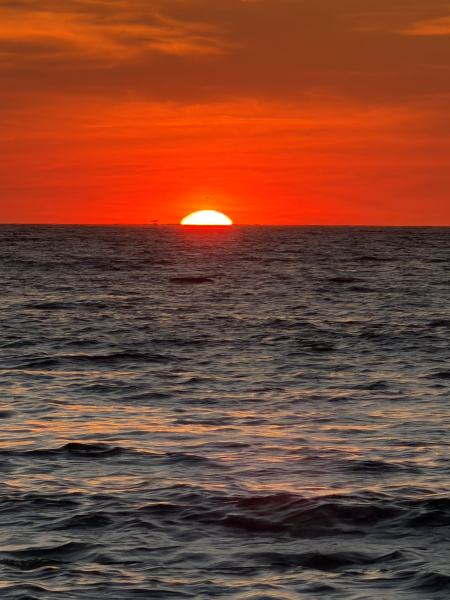
A lot of this noticing of people happened at sunset while sitting at Pedro’s — a restaurant right on the beach – feet in the sand, margarita in hand, with a front-row seat to the light slowly shifting. People walk from different directions and stop for a chat. Or they walk together and stop to linger. Conversations stretch out. The beach becomes less of a destination and more of a shared place to pause at the end of the day, a place to watch the glorious globe of orange make its descent. And it’s a perfect spot for people-watching — and for noticing how connection can quietly shape a scene.

What I love about these moments is how little information I need to share in a painting. When two people stand or sit together, a story is already implied. The viewer brings their own narrative to the scene — who these people might be, what they’re talking about, how long they’ve known each other. As the painter, I don’t need to explain any of it. My job is simply to suggest enough, to paint what attracted me, then step back and let the conversation belong to them.
Why figures keep pulling me in
I’ve long been drawn to painting figures; the way a shift of weight, the tilt of the head, the gestures hands make, say so much. And when figures appear in pairs, the sense of relationship is already there before I even begin.
In these beach scenes, nothing particularly dramatic is happening. No one is rushing. No one is performing. The figures are simply together — standing, waiting, talking. That ordinariness is exactly what holds my attention. The challenge becomes one of noticing rather than inventing: how close they stand, whether they face one another or look out together, and how their bodies quietly echo or counter each other.
Choosing not to wait
I take a lot of photographs — always have, always will. Usually, I’m not that quick at getting to them, to review and then paint from. This time, though, I decided to start working from them straight away.
Partly, that was practical. I had the references, the time, and my materials with me. But there was also a nudge of self-awareness in there. I’m forever teasing my mum about the number of photos she takes and asking, “So when are you going to paint from them?” I didn’t particularly want her turning the tables on me!

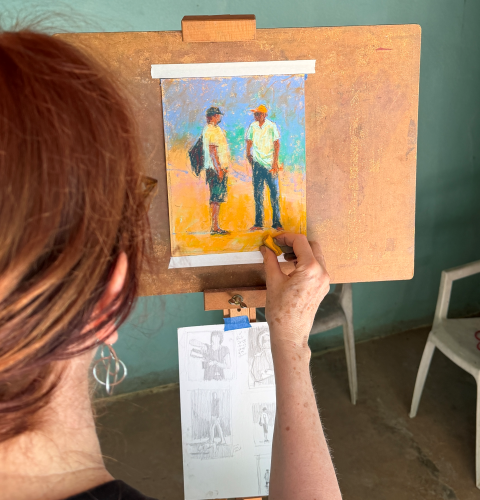
There’s something energising about painting while the experience is still fresh — while the heat, the sound of the sea, and the quality of the light are still close. These pieces feel tied to that place and time because they were made inside it, not created later.
A quiet challenge with unfamiliar materials
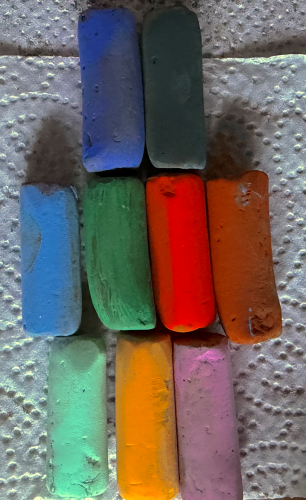
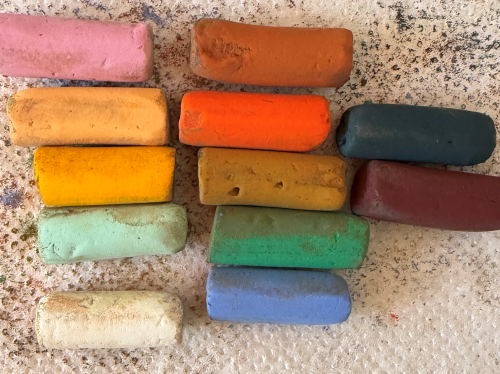
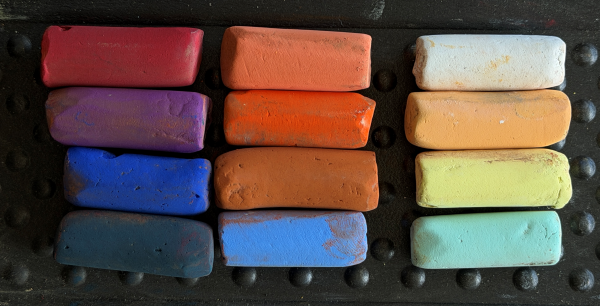
My instinct is to reach for the Unison Colour pastels in my set and work on UART paper — familiar, dependable, and deeply embedded in my muscle memory. For this trip, however, I also brought along a small pad of Pastelmat, paper I’d not used before, and a Sennelier 40-piece set. Just to mix things up a bit and get out of my comfort zone – always good to do once in a while.
That unfamiliarity turned out to be a gift.
The softness of the Senneliers combined with the velvety surface of the Pastelmat asked me to slow down and pay attention in a different way. I couldn’t rely on habitual marks. Each decision felt more deliberate, from the first block-in to the final touches. I did keep to my usual habit of limiting myself to a small, specific palette for each piece and that helped keep the focus where I wanted it — on the figures and their relationship, rather than getting too caught up in colour elaborations or duplicating the reference.
All three of these paintings were made this way: unfamiliar materials, limited colour choices, a lot of looking, and quietly finding my way.

Painting figures in conversation
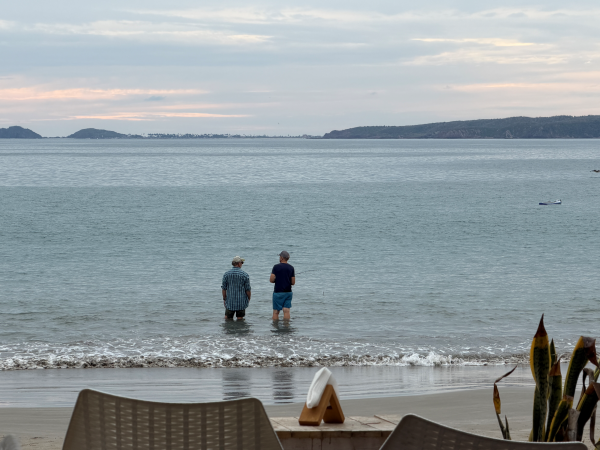
Two men in the water
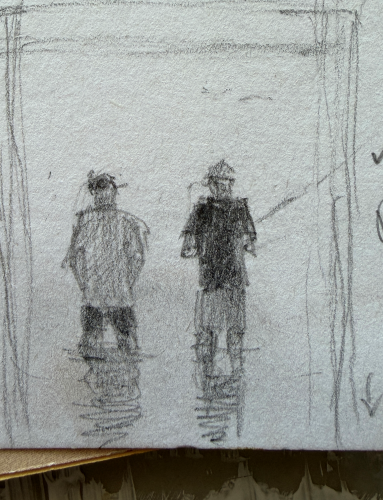
In the first piece, two men stand side by side in the shallows as one fishes. What interested me here was their shared focus. They aren’t facing each other, yet the sense of connection is unmistakable. Proximity and a similar stance do most of the work. Even the broken reflections in the water echo that togetherness.


Two men chatting on the beach
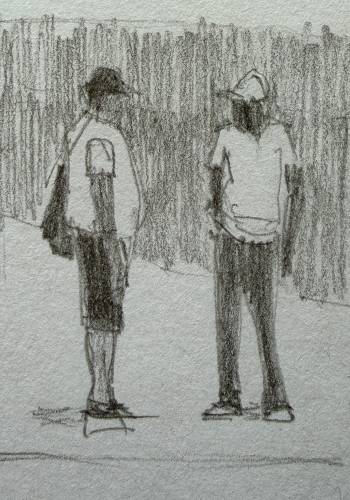
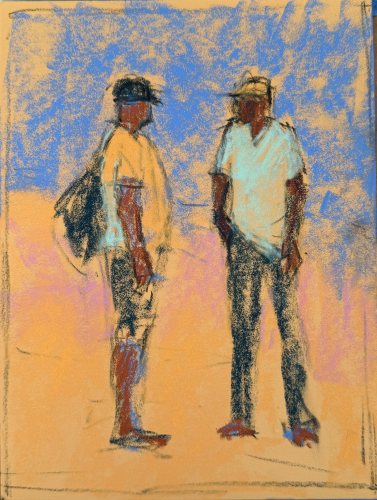
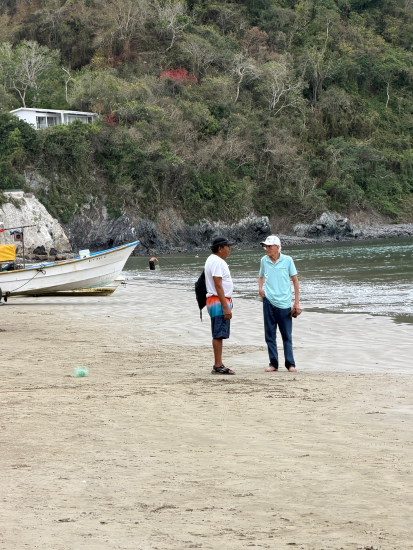
With the two men on the beach, the dynamic shifts. Here, posture and spacing become the storytellers. They face each other more directly, but there’s still plenty of air between them. Nothing feels urgent. The conversation is suggested through ease rather than gesture — through how comfortably they occupy the same space. What do you think is happening? I’m curious to know what you think!
The yellow colour of the Pastelmat reinforces that late-day warmth on the beach.

Two women in conversation
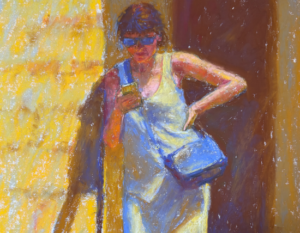
The conversation between the two women carries yet another note. There’s a sense of balance and calm here. Their bodies relate gently, without emphasis or tension. Each holds something in hand – sandals in one, phone in the other. Such a typical scene here! Once again, facial expressions are unnecessary. The relationship lives in the connection between them.
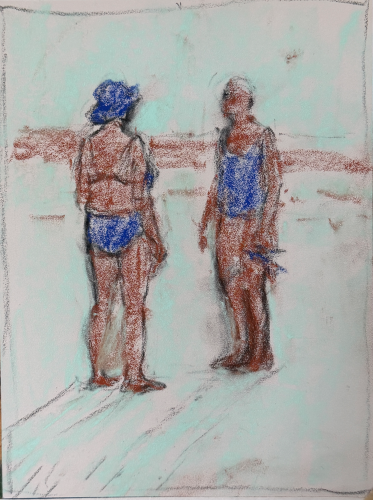

Across all three, I was reminded how little is actually required to suggest connection and story. Working so small with large pastels means it’s difficult to add small details which in turn means that the painting rests on the relationship and postures of the figures.
Letting the viewer complete the story
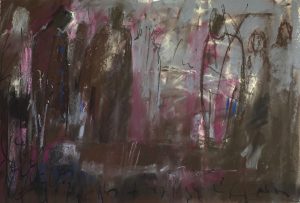
None of these small pastel pieces of figures in conversation tell a specific story, and that’s intentional. The conversation belongs as much to the viewer as it does to the figures. Who are these people? What are they talking about? Have they recently met or known each other for years?
By resisting the urge to explain, I’m trusting the viewer to bring their own experience to the work. For me, that restraint is part of the pleasure — and part of the challenge — of painting figures in conversation.
Beach Conversations, quietly noticed
These three pieces are only a small part of what I painted while in Mexico, but together they revealed something worth paying attention to. Beach Conversations isn’t a formal collection so much as a way of seeing — a reminder that connection often shows up in the most ordinary, unremarkable moments…on the beach for example.
And now I’m wondering: what quiet human exchanges keep catching your eye, even when nothing much is happening at all? Has this inspired you to start painting figures in conversation? I’d love to hear from you so please leave a comment!
Until next time,
~ Gail













6 thoughts on “Painting Figures In Conversation – Quiet Moments From The Beach”
Gail, I absolutely loved the Beach Conversations paintings. I enjoyed imagining the conversations and connections between the people. It was interesting that you mentioned how little details you could add. I went back to look more closely at each one only to realize my mind was hard at work filling in details I thought you had painted! I love how each one is full of possibilities. Great work and thank you for sharing.
Thanks so much for your kind comment Janell. I’m happy to think you are imagining the stories and relationships between the figures.
And I LOVE that when you went back in to have a look, you noticed how little detail there really is in the painting. Thanks for sharing that. The human mind is an amazing thing – just look at how it can fill in all the info!!
Oh yes, Gail! These moments are a huge part of daily life, but rarely noticed. You gave these figures tlc and importance. I love what you have done!
Thank you so much Noreen for your enthusiastic response to my pieces and the idea in this post!
It is great to read your reflections. At the moment, I’m chasing watercolor pencils and waterproof India ink.
But what fun to read what a friend is doing.
Your guidance has help me shift focus from “imagainating” painting the Empire State Building to focus on the door knob, so to speak. Recently some intense conversations with friends has suggested so much that might wind up on a sheet of paper. Maybe in color as well.
But isn’t it wonderful that taking pictures is so cheap without processing film.
Peter, how lovely to get your comment. I’m happy to hear things have shifted art-wise for you 😀 Love that you are playing with ink and watercolour pencils – sounds fun!
And yes, you are right about being able to take photos cheaply – a blessing and a curse lol!